The sun was so dazzling that it was cruel.
Pours into the eastern Himalayas. The snow-capped peaks reflect the strong light, like countless icy diamonds inlaid on the endless blue screen. In this extremity area that is difficult for humans to reach, an invisible passage once carried the hope of a nation's survival and swallowed up countless young lives.
Looking down, in the huge folds of green and gray-brown, deep in the Hengduan Mountains, if you fly low enough or look sharp enough, you will find some strange flashes. They are scattered along the edges of bottomless canyons, dotted along mist-shrouded ridgelines, and even embedded in the gravel piles of melted glaciers. It wasn't ore, it wasn't water, it wasn't the reflection of ice and snow.
That's aluminum.
It is the last light of the aircraft skin that shines tenaciously under the erosion of time.
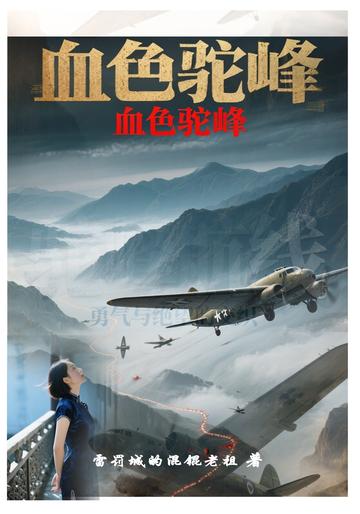
The route from Assam, India, to Kunming, Yunnan, China, is called the "Hump" with fear and awe. It is not a straight line, but forced by the dangerous terrain and fierce Japanese fighter planes, it is like a camel's back, undulating and winding among deadly peaks. The 600-mile air corridor was China's only umbilical cord to the outside world during World War II. Every drop of fuel, every artillery shell, and every piece of penicillin that arrived was imbued with courage and despair.
Three years, 800,000 tons of supplies, and thousands of pilots. The price was the wreckage of more than 500 planes scattered on this route. On a clear day, later pilots don't even need complicated navigation instruments. They can identify this flight corridor just by following the continuous "trails of aluminum" that are faintly visible in the sun.