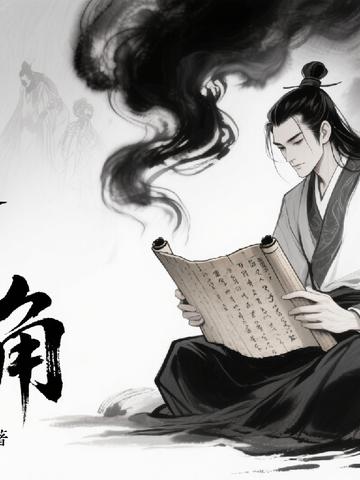
When the modern soul Huang Xing opened his eyes on the hospital bed in the late Eastern Han Dynasty, he became the "great virtuous teacher" Zhang Jiao who was about to sound the death knell of the dynasty.
Behind the label of "monster thieves" in history books are the desperate screams of millions of refugees for "land to the tiller"; beneath the talisman of Taiping Road lies the simplest desire for survival of the people at the bottom. He tried to save this uprising that was doomed to fail with modern thinking, but discovered during his struggles:
The so-called "historical necessity" is nothing more than the bloody path of thousands of little people in desperate situations; the so-called "limitations of peasant uprisings" are the gap between productive forces and systems, the coldness of class barriers, and the tear between faith and reality.
He looked at Zhang Bao and Zhang Liang's short-sightedness, looked at the light in the eyes of the believers when they held the gruel, looked at the officers and soldiers crushing them under the armor, and finally understood: Huang Tian of Taiping Road may have never wanted to replace the sky, but just wanted to let those struggling in the mud breathe more.
This is not a story about a counterattack that changes one's life, but a story about a soul standing on the ruins of history and understanding the blood, tears and cries of thousands of nameless people behind the word "Yellow Turban".
Reader comments
It is a very good book. It makes people feel as if they have returned to that era in a dream, with all kinds of heroic spirit in their hearts and a feeling of powerlessness that cannot be used. After waking up, the aftertaste is still sad.
It is a very good book. It makes people feel as if they have returned to that era in a dream, with all kinds of heroic spirit in their hearts and a feeling of powerlessness that cannot be used. After waking up, the aftertaste is still sad.