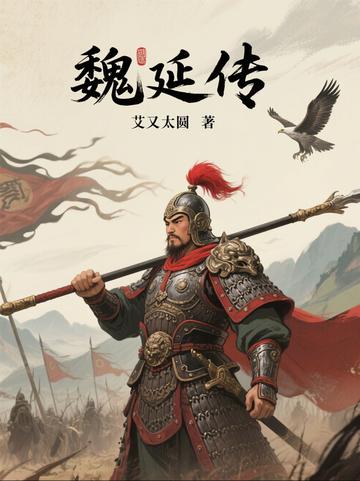
"The Biography of Wei Yan" takes the life of the famous Shu Han general Wei Yan as the context and unfolds a long scroll of heroes in the troubled times of the Three Kingdoms. From the young man who followed Liu Bei to Shu in the 16th year of Jian'an, to General Zhenyuan who guarded Hanzhong in the 24th year of Jian'an, to the general who conquered the west during Zhuge Liang's Northern Expedition in the Jianxing year, Wei Yan's armor has always condensed the wind and snow of Qishan Mountain and the sound of the waves of Han River.
The novel not only restores the true character of a general who is "good at raising soldiers and extremely brave" in the history books - his sharpness in the surprise attack on Luocheng, his resourcefulness in "defending the siege by mistake", and his majesty in defeating the Wei army in Luocheng, it also depicts the thoughts of the lonely minister in delicate strokes that have not been recorded in history: the oath to Liu Bei at the top of Yangpingguan to "reject Cao and swallow the enemy", and Zhuge Liang's discussion about "Ziwu Valley's conspiracy" in the Wuzhangyuan military tent. They argued all night long, and Qingfeng's blood spattered when he faced the rebellion of his old troops in the Mumendao Canyon.
Yang Yi's frame-up, Ma Dai's sword, and the suspicion of the Chengdu court finally pushed this "pillar of the northern border of Shu Han" to a desperate situation. But when his head was sent to Chengdu, the people of Hanzhong still erected the "Han" flag on the city tower, and the wild chrysanthemums of Qishan Mountain were quietly spreading along his burial place - that is a more lasting monument than the title of a marquis or a general.
The book uses war history as its bones and human nature as its blood. It asks in the light of swords and shadows: When loyalty is misunderstood, when achievements are tampered with, how long can a general's sincerity burn in the dust of history?