During the storm of harsh family-planning policies in the 1990s, Zhao Xiaoqing, originally named Sansan, was born into the Zhao family in rural Hubei. Her birth was not the arrival of the son her parents had hoped for. Instead, it became the final straw that broke the back of their impoverished family. To escape a huge fine and the threat of having their home demolished, baby Xiaoqing was forced to flee overnight to Hankou with her parents, Zhao Liangde and Li Chunhua, while her two older sisters were left with relatives. In Hankou, the weight of daily life and the harsh surroundings pushed the exhausted Li Chunhua to breaking point. One night, she accidentally kicked Xiaoqing, leaving a permanent scar on her forehead and a wound in her mother’s heart that would never heal.
That scar was the first mark of Xiaoqing’s painful childhood. After getting lost one day, she unexpectedly gained the official name “Zhao Xiaoqing,” revealing how precociously resilient she was. During a brief summer holiday, she and her sisters, who had come to visit, went “treasure hunting” for vegetables discarded at the market, savoring rare sweetness amid their impoverished lives and the warmth of being together again. But after her sisters left, Xiaoqing was often locked inside their dark rental room, or left alone to search for “treasures” among the junk at a recycling yard, before falling asleep in tears.
When her father changed jobs, Xiaoqing’s world shifted from the recycling yard to her mother’s roadside vegetable stall. There, she witnessed the raw struggles of the poor: urban management officers driving vendors away and confiscating their goods, and her mother fleeing in a panic, driven by fear and the instinct to survive. In Hankou, battered by the storms of the 1990s, Zhao Xiaoqing grows stubbornly and begins to understand the world. This is a story of scars, survival, and searching for tiny glimmers of light in a bleak reality.
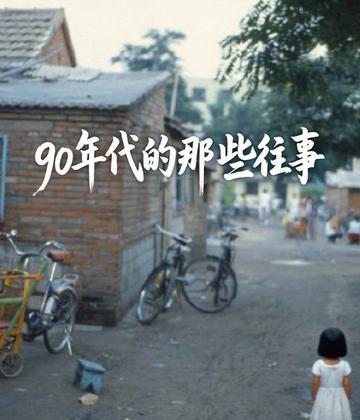

A hard life tempers a strong life, with escape-wandering-rooting as the main thread. It tells the story of a family's struggle, growth and protection in the 1990s. It has a sense of time, as if I have lived my childhood all over again.
A true reflection of the difficult life of little people in the 1990s From the perspective of a little girl growing up, it records the hard work of a family in the 1990s. Although there is no golden finger, it is not happy, but the success is the smooth flow and delicate emotions!
I like reading articles like this that are close to life, full of childhood memories!
The heavy handwriting depicts the suffering life in a true and realistic way.
The content is rich and colorful!
More realistic and simple, I like reading this kind of books