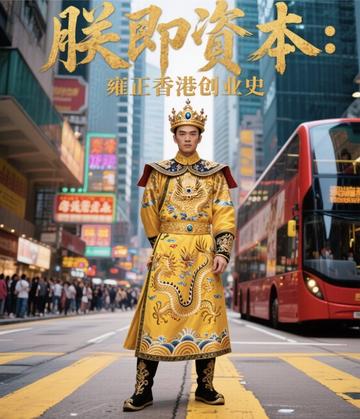
The dragon's chair is slumped, and capital is the frontier.
Aisin Gioro Yinzhen fell from the pile of memorials in the Forbidden City and crashed into a cage house in Sham Shui Po, Hong Kong in the 1990s. Wrapped in a dragon robe and wearing a black household identity, and his royal pen replaced by a dishcloth, this emperor, known for his iron-fisted reforms, learned to speak Cantonese swear words in his first lesson to avoid being traced by the immigration bureau.
He brought with him all the belongings of an emperor: he had a photographic memory to read through the "Company Law", an intuition for distinguishing between traitors and traitors, he saw through business traps, he used the ruthlessness of "property raiding" to eliminate opponents, and he transformed into a commercial espionage network with the "secret folding" technique. From the gray trade of smuggling mobile phones to the maritime hegemony of controlling the smuggling of red oil; from taking over the cash flow of mahjong parlors to ringing the bell in Central - he used the Kowloon Walled City as a palace, let the stock market K-line change, and reconstructed the capital game with the logic of "dividing a small family into an acre".
When gangsters encounter "house raiding" suppression, when wealthy families encounter "military department" management, and when international capital encounters "literary prison"-like public siege, the emperor in a suit sneered: "I can rule the world, and I will use capital to play."
From cage houses to Victoria Peak, from illegal workers to business tycoons, he used the tactics of three hundred years ago to write the most wild entrepreneurial history in modern Hong Kong - after all, capital is never a place of tenderness, but a new battlefield of imperial magic.