Stats
9.2Score
12Chapters
Tags
Synopsis
Reader comments
In booklists 7
Masterpiece! ! ! a Chinese and Foreign Classic Book! ! !
94.6MViews930Books1dUpdated

Learning Books
26.3MViews928Books19hUpdated




Are There Any Books That Are Similar to the Canon?
17MViews501Books1dUpdated


World Famous Books
🍅All the world famous books I can find are thrown at me, I can bear it
9.3MViews764Books3dUpdated
Literary Classics, Reading Classics
I want to read a book similar to "The Chief Assistant of the Empire: Zhang Juzheng".
6.2MViews709Books3dUpdated

Are There Any... Foreign Masterpieces... Chinese Masterpieces?
2MViews783Books5dUpdated

A Book That Can Be Excerpted for Writing a Composition
I want to read a book like "Master Master Became My Husband". Available in many places, beautifully written
1.1MViews625Books3dUpdated
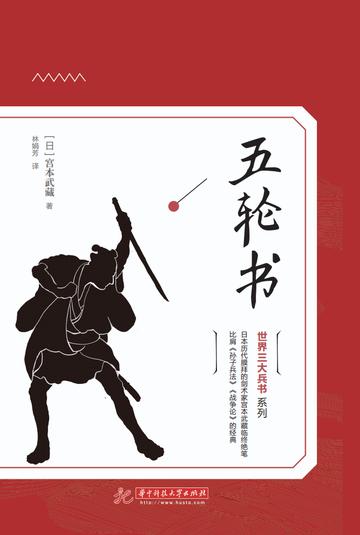
After reading Sun Tzu's Art of War, I read The Book of Five Wheels. Although both books teach combat experience, I found that the combat concepts of the two books are very different. Sun Tzu's Art of War focuses on not fighting unless necessary, while The Book of Five Wheels emphasizes attacking the enemy first and teaching us how to perfectly use weapons to defeat the enemy. So if you are at a hot-blooded age, I suggest you read Sun Tzu's Art of War and settle down. If you are at a low point or a sluggish period in your life, you can read the Book of Five Wheels, and you may get good results [already planted] As I read on, I found that the translator focused on modifying Miyamoto Musashi's kendo philosophy, and succinctly highlighted the wild nature of "enlightenment through war" in the art of war.
"The Book of Five Rings" is actually not just a guide to swordsmanship, but a classic that combines practical philosophy, life wisdom and the essence of Eastern culture. It has a unique structure, based on the five volumes of "earth, water, fire, wind, and air", and gradually reveals the core of its "two-day first-class" military strategy. Although it advocates the simplest and most direct attack methods and one-move victory, and is a bit "irrelevant about martial ethics" in seeking victory, it has unique insights into mental methods, emphasizing the need to respond to changes with a normal mind. It's still worth reading. The Scroll of the Sky is about sublimation, pursuing the state of "nothing", and saying that "there are no moves to win, but there are moves." Miyamoto Musashi pointed out that the true way of art of war lies in the state of emptiness achieved "after great enlightenment", which is also his lifelong pursuit.
This book has a resounding name and is called one of the "three major military books in the world". After reading it, I feel that the temperament of the island girl is indeed as stable as ever: she pretends to be cool in a serious way, and as long as she is not embarrassed, others will be embarrassed.
This book mainly talks about Miyamoto Musashi's lifelong swordsmanship and art of war. The whole book is divided into five volumes of earth, water, fire, wind and air, which are combined into the Five Rings Book. When I first opened this book, it felt strange, as if I had never been exposed to it before. But the more you read, you will find that many of them have been heard and seen before, but after reading this book, their understanding becomes clearer and deeper. For example, the Book of Earth talks about the basics of sergeant, agriculture, industry and commerce, the four ways to make a living, the Book of Water talks about skills, the Book of Fire talks about practical combat, the Book of Wind talks about various schools, etc., Which are all very interesting. My thoughts after reading this are that the Scroll of Earth tells us to recognize ourselves and figure out what we are doing; the Scroll of Water tells us to follow the trend, and we can bypass or gradually solve difficulties when encountering them; the Scroll of Fire tells us not to be impatient; the Scroll of Wind tells us to keep learning and constantly improve ourselves, etc. The art of swordsmanship and warfare is a step-by-step process. Sword practitioners first focus on visible moves and routines; then they learn swordsmanship and hone their skills; and finally, they discover and understand its true meaning through continuous practice. This is the same as our learning process. Learning is also a step-by-step process. This process is full of ups and downs. If we are eager to see the effect, we cannot achieve it. We can only achieve better results every time in the process of constant negation.
"The Book of Five Rings", "Sun Tzu's Art of War" and "On War" are also known as the world's three major military books. Unlike "Sun Tzu's Art of War" which emphasizes "conquering the enemy without fighting", "The Book of Five Rings" pays more attention to killing the enemy head-on without leaving any consequences. It emphasizes that martial arts must highlight the characteristics of actual combat, and further acknowledges that martial arts has a certain degree of cruelty and danger. The whole book is divided into five volumes: earth, water, fire, wind and space. The translator combines his own views to help readers further understand the meaning. "Book of Five Wheels" is like a double-edged sword that travels through time and space: one side is engraved with the wisdom of the life-and-death game in the cold weapon era, and the other side reflects the underlying logic of competition in modern society. It is never a manual that teaches you "how to win" step by step, but a thinking practice that tempers the mind and breaks the shackles.
He does have something, and he might be able to chat with Chen Hegao. However, his system is too focused on actual combat experience, and sword skills are not. . . If you don't have the ability to win every battle, you won't have the opportunity to accumulate experience. . . It's really not suitable for teaching students.
More rigorous than the other
It is indeed a "war" book, a book about weapons and has nothing to do with "art of war". On the contrary, we can see the serious and pretentious virtues of the people of the island country.