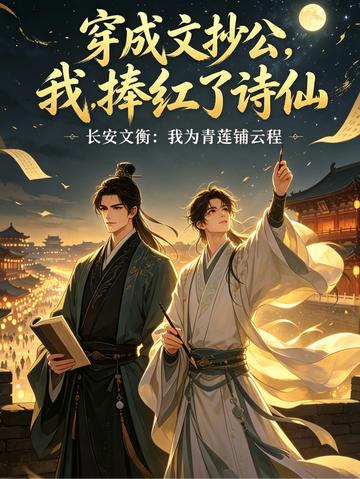
Gu Yanzhi, a struggling Internet writer in the 21st century, was kicked into the Zhenguan year of the Tang Dynasty because he argued with someone on the subway whether "Spring Dawn" was Li Bai's original work.
When he opened his eyes, he was sitting in the county examination room. The examiner in front of him urged him to compose a poem, but he opened his mouth when he was sleepy - "I can't sleep in spring, but I can hear the singing of birds everywhere."
The whole room was shocked and he took the case.
When the exam was over, he caught a glimpse of an unkempt, poor boy squatting in the far corner of the examination room. He had a dark red birthmark the size of a copper coin on his left wrist. The man raised his head and smiled at him: "Your poem is not bad, it looks like it was composed by a three-year-old child."
That person is Li Bai. At the age of sixteen, his family was in decline, so he squatted in the corner and ate his bread.
Only then did Gu Yanzhi know that the song "Spring Dawn" he copied had not yet come out in this world - because no one except Li Bai himself remembered the nursery rhyme Li Bai hummed casually when he was only three years old.
He panicked. He rushed to read Shixian's poem before Shixian, and Shixian himself praised him for "well done".
What to do? Run? Tibetan? Or...
How about feeding, educating, and sending the man in front of him to Chang'an, so that the Shixian himself can write something that will shock the past and the present?
From Lin'an to Chang'an, from the county examination to the system examination, from the Imperial College to the Shilu Bureau. Gu Yanzhi relied on the "future poetry library" in his mind to continue Li Bai's ending, fill in the remaining chapters, and deflect open and covert arrows. And Li Bai, that seemingly carefree young man, also used his wild talent and unreserved trust to turn Gu Yanzhi from a "literary copycat" who relied on plagiarism to save his life, to "the only person assigned to poetry fairy palm lamps" little by little.