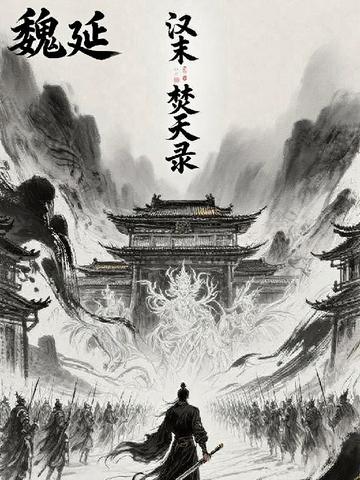
When the boy in a Nanyang cellar watched the fields turn to scorched earth and the people resort to exchanging children for food, the vow to “restore the Han and bring peace to the people” was etched into his very bones.
He is Wei Yan, a lone warrior of humble birth, crushed beneath the weight of the great clans. From narrowly escaping death in the Yellow Turban chaos to slaying a general and capturing Changsha, he abandons the losing side and follows Liu Bei along the Shu Road, only to face suspicion time and again because of his background. Zhuge Liang sees him as a “stubborn, hard-to-tame” blade, and Zhao Yun laments that he is “brave but rash.” Only Liu Bei recognizes the sincerity in his eyes: “He saved the people from the depths of suffering. What crime has he committed?”
In a surprise raid on Luocheng, he leads a band of death-defying warriors through an abandoned salt road to breach the city. At Mount Dingjun, he uses repeating crossbows to lure the enemy and routs Zhang He’s reinforcements. Before Yangping Pass, he vows, “If Cao Cao brings the whole realm against us, I will hold him back for the king,” and ultimately becomes the administrator of Hanzhong.
The most heart-stopping moment comes at Ziwu Valley. While Zhuge Liang insists on a steady advance through Qishan, Wei Yan wagers his life and five thousand elite troops, scaling sheer cliffs and enduring hunger and cold. In just nine days, his forces descend on Chang’an like divine soldiers, turning the tide of the northern campaign in a single stroke. This daring gamble not only rewrites the fate of the Shu Han, but also tears open the sky screen of aristocratic monopoly.
From a boy who guarded merchant caravans to a pillar of the Han restoration, Wei Yan’s strategic disagreements with Zhuge Liang, fierce opposition to the gentry, and lifelong commitment to putting the people first all revolve around one central principle: restoring the Han was never about bringing back the imperial clan’s power. It was about making the ideal of “full granaries and flourishing rites and learning” a reality for ordinary people.
When students at Luoyang’s Imperial Academy recite the Biography of Wei Yan, the canal murmurs outside the window, just like the stream in Ziwu Valley long ago, carrying the lone courage and ideals of a man of humble birth, flowing forever through the land of the Han.