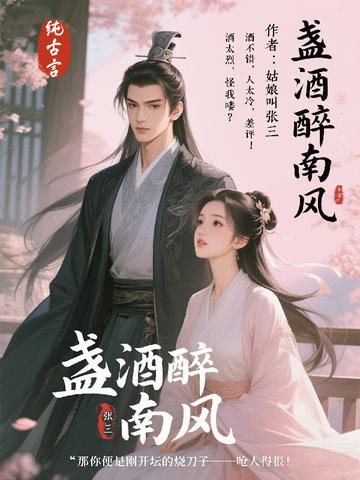
"Pure ancient Chinese language + double strength + sweet pet + strategic and refreshing writing", high sweetness and humorous dialogue style. No time travel, no golden fingers, a story of growing up together in the whirlpool of conspiracy and power.
Yan Nanfeng looks cold and stern, but in fact he is evil and dotes on his wife. In front of outsiders, he is a "cold jade general", but in front of her, he becomes a "worrying old father" and is good at strategy.
Warm-cup wine is crisp and refreshing, charming and agile, and he is an orphan. He is addicted to alcohol but has a poor drinking capacity. He gets drunk after three drinks. When he is drunk, he likes to compose poems and tease Yan Nanfeng.
Classic dialogue,
Wen Zhanjiu: "The wine is good, but the person is too cold, so bad review"
Wen Zhanjiu: "Yan Nanfeng, you... You look like a jar of snow wine that has just been opened and has been aged for ten years! The aroma is sufficient, but... It's too embarrassing!"
Yan Nanfeng: "Then you are the Shaodaozi who just opened the altar - very choking!"
Wen Zhanjiu: "The wine is too strong, do you blame me?"
Reader comments
A first-time novelist's confession of mind
People who write novels for the first time usually have a creator's passion mixed with the creator's fear. The mood was very complicated. It was like suddenly getting a seed in spring and eager to bury it in the soil to watch it sprout and grow leaves. It was also like a night traveler holding a lantern and groping in the dark. He was afraid that there was not enough light to illuminate the way forward, and he was also afraid that too much light would expose his own clumsiness.
At the beginning of writing, I felt an inexplicable excitement in my heart, as if there was an ocean hidden in my chest, with rough waves that had to be poured out. The characters speak for themselves in their minds, the plot stretches naturally like a vine, and the pleasure of creation is almost divine. The tapping sound of the keyboard has become the most pleasant music, and the accumulation of words on the screen is like building an invisible city. The author is the king in that city, controlling all life and death, love and hate.
However, this ecstasy was soon betrayed by words. The previously lively characters suddenly died on the page, the plot that was thought to be exquisite showed flaws, the metaphors were no longer clever, and the dialogue became stiff. At this time, the author is like a magician who suddenly finds that his tricks are not only seen through by the audience, but also by himself. So I deleted and wrote, wrote and deleted, and fell into the quagmire of self-doubt: Do I have no talent for writing at all? Are these words of any value? Why did the idea that seemed so dazzling at first turn dim as dust overnight?
This fluctuating mood runs through the entire writing process. Sometimes you are as confident as reaching the top of a mountain, looking around at no one, thinking you have touched the sky; sometimes you are as humble as falling into the abyss, looking at other people's works and feeling that your own efforts are nothing more than a firefly to the bright moon. Oscillating between the two states, I continue my creative journey.
Ultimately, writing is a lonely self-competition. Those words are not only the carrier of the story, but also the projection of the author's soul. The experience of writing a novel for the first time was about completing an in-depth visit to myself between ecstasy and fear. I not only discovered the mineral deposits deep in my heart, but also had to face the impurities and flaws in it. And this complex mood may be the most real and precious part of creation.
[Talking to myself about my article]
Sometimes when I look back at what I have written, I feel a very complicated emotion in my heart. I clearly know where it could be more refined, which twist is still missing, and which character would be nice to have a few more lines of foreshadowing - but I just can't change it. It's not laziness, but a strange stubbornness: it's like looking at a small mole on your child's face. It's obviously not perfect, but you always feel that it is his unique mark.
I have written exciting passages, and I have also written sticky and depressing chapters. In some places, my heart beats faster and my fingertips feel numb when I reread them. Not because of how good the writing is, but because I know that the emotion at that moment is real and comes from my heart. Even if it is clumsy, I am reluctant to smooth its edges.
Maybe writing is such a lonely thing: you create a world but know its flaws better than anyone else. But you still love it, love it enough to allow it to be imperfect, love it enough to be willing to light a lamp for it when no one is applauding.
When there is no reader interaction, just embrace your own story - after all, the reason for its original birth was to illuminate itself. [Full] [full]
A first-time novelist's confession of mind People who write novels for the first time usually have a creator's passion mixed with the creator's fear. The mood was very complicated. It was like suddenly getting a seed in spring and eager to bury it in the soil to watch it sprout and grow leaves. It was also like a night traveler holding a lantern and groping in the dark. He was afraid that there was not enough light to illuminate the way forward, and he was also afraid that too much light would expose his own clumsiness. At the beginning of writing, I felt an inexplicable excitement in my heart, as if there was an ocean hidden in my chest, with rough waves that had to be poured out. The characters speak for themselves in their minds, the plot stretches naturally like a vine, and the pleasure of creation is almost divine. The tapping sound of the keyboard has become the most pleasant music, and the accumulation of words on the screen is like building an invisible city. The author is the king in that city, controlling all life and death, love and hate. However, this ecstasy was soon betrayed by words. The previously lively characters suddenly died on the page, the plot that was thought to be exquisite showed flaws, the metaphors were no longer clever, and the dialogue became stiff. At this time, the author is like a magician who suddenly finds that his tricks are not only seen through by the audience, but also by himself. So I deleted and wrote, wrote and deleted, and fell into the quagmire of self-doubt: Do I have no talent for writing at all? Are these words of any value? Why did the idea that seemed so dazzling at first turn dim as dust overnight? This fluctuating mood runs through the entire writing process. Sometimes you are as confident as reaching the top of a mountain, looking around at no one, thinking you have touched the sky; sometimes you are as humble as falling into the abyss, looking at other people's works and feeling that your own efforts are nothing more than a firefly to the bright moon. Oscillating between the two states, I continue my creative journey. Ultimately, writing is a lonely self-competition. Those words are not only the carrier of the story, but also the projection of the author's soul. The experience of writing a novel for the first time was about completing an in-depth visit to myself between ecstasy and fear. I not only discovered the mineral deposits deep in my heart, but also had to face the impurities and flaws in it. And this complex mood may be the most real and precious part of creation. [Talking to myself about my article] Sometimes when I look back at what I have written, I feel a very complicated emotion in my heart. I clearly know where it could be more refined, which twist is still missing, and which character would be nice to have a few more lines of foreshadowing - but I just can't change it. It's not laziness, but a strange stubbornness: it's like looking at a small mole on your child's face. It's obviously not perfect, but you always feel that it is his unique mark. I have written exciting passages, and I have also written sticky and depressing chapters. In some places, my heart beats faster and my fingertips feel numb when I reread them. Not because of how good the writing is, but because I know that the emotion at that moment is real and comes from my heart. Even if it is clumsy, I am reluctant to smooth its edges. Maybe writing is such a lonely thing: you create a world but know its flaws better than anyone else. But you still love it, love it enough to allow it to be imperfect, love it enough to be willing to light a lamp for it when no one is applauding. When there is no reader interaction, just embrace your own story - after all, the reason for its original birth was to illuminate itself. [Full] [full]