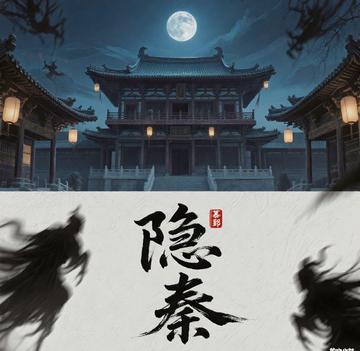
Could the eunuchs really have deceived Ying Zheng, the First Emperor of the Ages? Was Lü Buwei, the Warring States' greatest investor and a celebrated chancellor, truly frightened to death by a single letter? Did Fusu, the first crown prince of the feudal dynasties, beloved by all the officials and commander of the army, really take his own life just because he was told to? Where were the great ministers and generals of the Qin Empire, who unified China, when the dynasty fell? How did Liu Bang, a low-ranking village official, rise to become an emperor? Why did the Conqueror of Western Chu, Xiang Yu, meet his downfall? Why do the history books say so little about the Lü family, whose military achievements helped establish the Han dynasty, and exclude them from the ranks of its founding nobility? Where did the Yellow Stone Elder and Zhang Liang come from? Did the Qin Empire really fall after only two generations, as the mists of history suggest? Perhaps the claim that the Qin would endure for ten thousand generations was no empty boast. Perhaps Lü was not Lü, Liang was not Liang, and the ruler on the dragon throne was no king. Let us slowly lift the veil of history and glimpse the hidden world of The Legend of Qin. The show is about to begin.
The logic is clear, clean and fluent, and the language is in line with the times, not mindless writing.