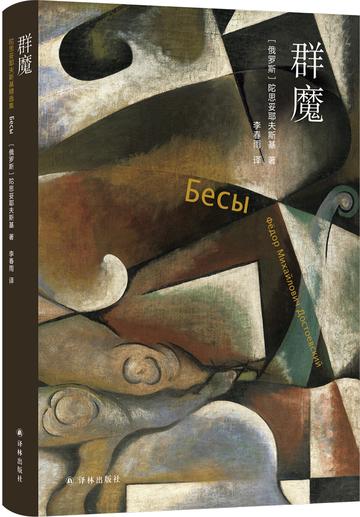
In 1869, Nechayev, a college student who believed in anarchism, conspired to establish the "People's Punishment Society" in Moscow. On the pretext that former member Ivanov might inform the authorities, he instigated his associates to assassinate him, and Nechayev himself fled abroad. Dostoevsky was inspired by this horrific case and spent two years writing the novel "The Demons".
The novel creates a group of characters with complex personalities: Stavrogin, a transhumanist who denies everything, Kirillov, a madman who attempts to commit suicide and become a god, Peter, a conspirator who uses revolution as a means to satisfy his selfish desires, and those bewitched, pious and fanatical idealists. Behind their ridiculous or heinous behavior, there is a deep tragedy hidden. The nihilism caused by extreme rationality and individualism is a by-product of modern industrial civilization. When people break away from the land and people, abandon all morals and traditions, have no faith, no love, no fear, and no refuge, while winning freedom, they also suffer hellish pain. "Demons" is not only a portrayal of the social reality of Russia in the mid-to-late 19th century, but also a prediction of the spiritual dilemma that contemporary people still cannot escape.