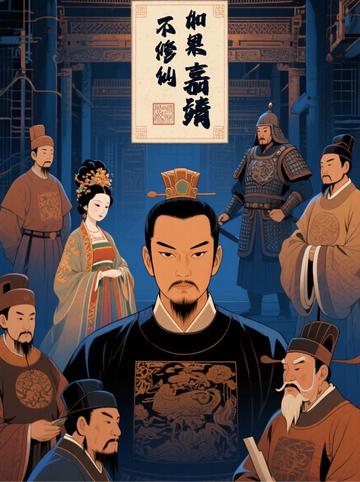
In 1521, candlelight flickered inside the Forbidden City as Emperor Wuzong of Ming suddenly died, leaving a quiet power vacuum. At the time, Zhu Houcong was a fourteen-year-old boy in Anlu, Hubei, yet fate pushed him onto the throne. But the soul sitting there now came from the modern world.
The moment he opened his eyes, he was confronted by three urgent crises:
• Militarily, the garrison system had rotted to its core. The border troops existed only on paper, Mongol cavalry were sharpening their teeth on the northern frontier, and Japanese pirates had their eyes on the prosperous southeastern coast.
• Politically, the Grand Secretariat and the Directorate of Ceremonial were locked in a bitter struggle. Local officials treated corruption as a matter of course, and the poisonous seeds of factional strife were already taking root.
• Economically, a market economy was just beginning to emerge, but remained constrained by backward technology. The imperial treasury was barely kept afloat by land taxes. Industrialization? They couldn't even smelt a decent piece of iron.
Armed with memories of modern civilization, this “False Jiajing” gripped his vermilion brush. Reforming the military and government, developing inventions, and strengthening institutions, he would force this battered Great Ming vessel to turn toward the course of industrial civilization. From this moment on, history veered off course.