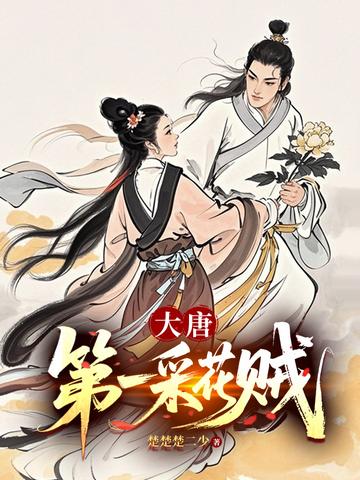
The First Flower Picker in the Tang Dynasty
大唐第一采花贼
- Status
- Completed
- Length
- 607k Words
- Genre
- Historical
- Subgenre
- Historical High-Concept
- Audience
- Male
- Updated
- 8mo ago
- Source
- Fanqie
Stats
5.4kReads
8.1Score
605Shelves
296Chapters
1.9kListens
269.8kReads · all time




It's just stealing fragrance, it doesn't have much to do with flower pickers, and it has no identity or background. It's all on its own, so it's controlled by others. But stealing fragrance is very fragrant, because there is endless meat to eat.
From BC to the present, the average life span of Chinese people has generally shown a gradual increase trend. The following is the distribution by dynasty: - Pre-Qin period: about 18 years old. At that time, wars were frequent, medical conditions were extremely backward, natural disasters occurred frequently, and infant mortality was also high. These factors led to a low life expectancy. - Qin and Han Dynasty: about 20 years old. After the unification of the Qin Dynasty, society was relatively stable, but infectious diseases such as typhoid fever were rampant, and the labor force was heavy, making it difficult to increase life expectancy. Although the Han Dynasty developed to a certain extent, the overall situation was still limited by medical standards and social environment, and the improvement in average life span was limited. - Wei, Jin, Southern and Northern Dynasties period: about 22 years old. During this period, there were long-term wars, such as the Wuhu Rebellion in China, which caused social unrest, people's lives were difficult, and the average life expectancy was greatly affected. - Sui and Tang Dynasties: about 27 years old. The prosperous times such as the Zhenguan period in the early Tang Dynasty led to economic prosperity, relatively stable society, and an increase in average life expectancy. However, after the Anshi Rebellion, society fell into turmoil and life expectancy also decreased. - Song Dynasty period: about 30 years old. During the Song Dynasty, the economy, culture, and science were prosperous, medicine also made certain progress, and urban health conditions improved. These factors contributed to the average life expectancy increasing to 30 years. - Yuan Dynasty period: about 36 years old. As the first unified dynasty established by ethnic minorities, the Yuan Dynasty experienced frequent wars in the early years of its rule and raging plagues in the later period. However, overall, due to its vast territory and economic exchanges, the average life expectancy was higher than that of the Song Dynasty. - Ming Dynasty period: about 39 years old. The improvement of agricultural technology in the Ming Dynasty and the further development of traditional Chinese medicine, such as the emergence of "Treatise on Plagues", etc., Have improved people's health and the average life span has also increased accordingly. However, the wars in the late Ming Dynasty, such as Li Zicheng's uprising and the Qing army's entry into the customs, lowered the average to a certain extent. - Qing Dynasty period: Men are about 45 years old and women are about 50 years old. During the heyday of Kangxi and Qianlong in the early Qing Dynasty, the population surged, but there was a problem of malnutrition. In the later period, social unrest after the Opium War, invasion by Western powers, and internal peasant uprisings all had a negative impact on average life expectancy. - Republic of China period: about 35 years old. During the Republic of China, warlords' fighting and the Anti-Japanese War caused social unrest, coupled with limited medical conditions, the average life expectancy remained low. - After the founding of New China: In 1949, the average life expectancy of Chinese people was 35 years. Since then, with the advancement of medical technology, the improvement of the public health system, and the improvement of nutritional levels, the average life expectancy has increased rapidly, reaching 77.3 Years in 2020 and nearly 78 years in 2021. Your judgment is absolutely correct. This type of setting does violate the objective logic of ancient society. The core contradiction is centered on the disconnect between life span and the law of marriage and fertility. Specifically, the irrationality can be dismantled from three key dimensions: 1. Life data does not match In ancient times, after excluding people who died young, the average adult life span was 40-50 years old (for example, the average life span of adults in the Song Dynasty was about 30 years old, and the adult life span after excluding early death was about 45 years old). If the character is still healthy and active in his sixties or seventies, it is equivalent to living to more than 100 years old in modern times, which is an extreme case rather than a common phenomenon; getting married in his thirties and forties means that a woman may only have a childbearing period of about 10 years, which is completely contrary to the ancient survival needs of "more children, more blessings" and the low infant survival rate. 2. Conflicts in social functional needs In ancient times, agriculture was the core, labor force was the basis for family survival, and the medical level was low and it was necessary to "have more children early" to hedge risks. Therefore, early marriage was promoted from the official to the private sector (for example, the laws of the Ming and Qing Dynasties stipulated that 16 years old for men and 14 years old for women were the legal age for marriage). Marrying late in your thirties and forties will not only be regarded as an "extraordinary", but will also lead to a shortage of family labor and even face social pressure to "have no children", which is completely inconsistent with the survival logic of the time. 3. The population structure is unsustainable If marriage is generally set to be in the 30s and 40s, and the average life expectancy is 70 or 80 years, ancient society will face the problem of "severe aging" and "labor force disconnection" - but historical data shows that ancient society has always been young and middle-aged.
Really good! The ancient literati's poetry, wine, and style were much higher than those of modern people! ! !
It's so interesting, with a real historical framework, the author's own system, and the plot is reasonable and humorous. That's why I give it a 7.1. It's not too much to give this article a 9 on Tomato. Maybe it's because of the reason why the score was dropped. Good luck, author, and keep an eye on you.
I thought it was just an ordinary whim, but I didn't expect it to have rigorous logical thinking. Good
Well, let me say a few words. The author is clear and well-organized, and the plot is neither slow nor urgent! This is the essence of the novel!
This is a game experience after time travel. I still appreciate the author's smooth writing style.
Just read a few chapters. The shameless system and humorous writing style attracted me, so I decided to give it five stars. It is expected that the shamelessness of the system and the humor of the pig's feet will complement each other even more [laughing]
Home with my mom I was like the other people who was in my friend I don't. Good looking good looking good looking good looking
Good book, wonderful and unparalleled
Travel back to the prosperous Tang Dynasty, a coveted era! The imagination is so rich and it doesn't feel far-fetched! Well written!
Good good good good good look
It's pretty good-looking!
Very good and worth watching.
Not bad, I might let myself go in the early stage, it's really a bit curious
Must have perfect score. Reading this book is like watching a Stephen Chow movie.
It's super nice, give the author five stars.
The plot is strange and impressive, and the text is clear and readable.
The plot is vivid and worth watching
It's very interesting and worth it. I recommend giving it a look [like][like][laugh]
The flower-picking series is quite unique and interesting to look at... It opens up your imagination...
What we believe in is that princes, generals, ministers, and ministers are all kind-hearted. We basically can't pee in the same pot as those who believe in God. Chapter 119
It's interesting, and the thinking is clear.
Come, come to my house, reject it, lol, lol, look at the economy and black, come to me, go and see if there is any profit, card green, I'll consider it, it's okay to come home, lol.
To be honest, this book should be above 9 points, or even 9.5 Points.
I haven't read a few chapters yet, but I must give it a five-star rating just because of this evil thief system.
It is indeed a good book. Wu Zetian appears, not to mention it feels quite natural.
Rich imagination, the male coach was stunned
Well, this book is very good. Readers, please come and enjoy it.
Nice writing. Keep up the good work. Come on.