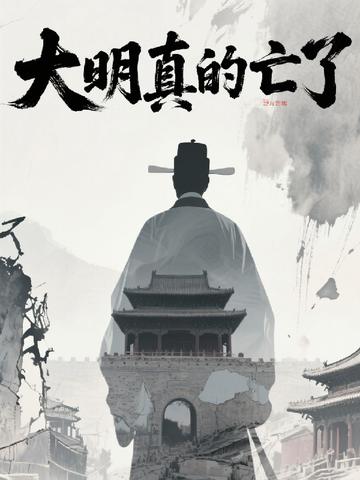
The crooked tree on Coal Hill brought the spring of Chongzhen’s seventeenth year to a hanging end.
When Li Zicheng’s rebel banner rose above the walls of Beijing, Chongzhen’s blood-written message was still trembling: “The ministers have failed me.” But he didn’t know that as starving people in Shaanxi rose up, gnawing on tree bark, Yuan Chonghuan was being executed by a thousand cuts in Liaodong, with the people fighting over his flesh; that Hong Taiji was planting grain in the frozen soil of Yizhou, while Kong Youde’s red-barreled cannons were aimed at Jinzhou; or that the Donglin partisans in Nanjing were still arguing over “who the traitor is” as Dutch warships quietly sailed into Penghu.
It was an age torn apart. The courier Li Zicheng went from a fugitive who had killed a landlord to the Shun King who drove an emperor to his death, only to be defeated at Shanhai Pass by the Manchu army. Zheng Chenggong raised the banner of “Restore the Ming, Drive Out the Qing” in Xiamen, then turned around and expelled the Dutch colonists from Taiwan. Shi Kefa wrote a blood letter in Yangzhou; Li Dingguo twice routed princes in the southwest. In the end, neither could stop the Eight Banners from trampling Jiangnan beneath their iron hooves.
From Chongzhen’s anguished cries as he killed his own daughter to the sigh of the Yongli Emperor as he was strangled; from the bloody slaughter of Sichuan by Zhang Xianzhong to the flames of the Yangzhou Massacre; from the setting sun over Coal Hill to a lone sail on the Taiwan Strait: this was not the fall of a dynasty, but an answer written in the blood and tears of countless people. When loyalty is crushed by suspicion and the people are drained dry by tyranny, no number of heroes can stop the cold verdict:
The Great Ming is no more.