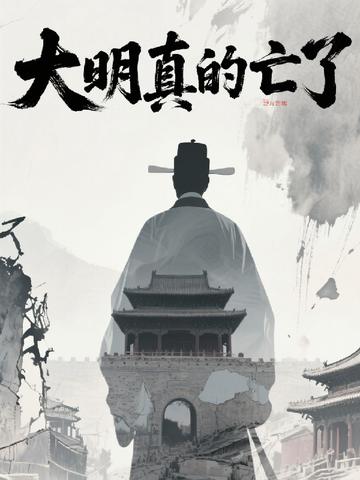
The crooked-neck tree in Meishan hanged the spring of Chongzhen's seventeenth year.
When Li Zicheng's King Chuang flag was planted on the top of the city of Beijing, Chongzhen's blood letter was still trembling: "I have been mistaken by all ministers." But he didn't know that when the hungry people in Shaanxi revolted by chewing tree bark, Yuan Chonghuan in Liaodong was being tortured, and the people were vying for his meat; Huang Taiji was growing food on the frozen soil of Yizhou, and Kong Youde's Hongyi cannon was aimed at Jinzhou; the Donglin Party members in Nanjing were still arguing about "who is the traitor", and the Dutch warships had quietly docked in Penghu.
This was a torn era: Postmaster Li Zicheng went from a fugitive who killed the landlords to a Dashun king who forced the emperor to death, but was defeated by the braided army in Shanhaiguan; Zheng Chenggong raised the banner of "anti-Qing and Fuming" in Xiamen, and turned around and expelled the Dutch colonists in Taiwan; Shi Kefa wrote a bloody letter in Yangzhou, and Li Dingguo became a king in the southwest, but ultimately could not stop the Eight Banners from crushing the south of the Yangtze River.
From the cry of Chongzhen who beheaded his daughter, to the sigh of Emperor Yongli who was hanged; from the bloodshed of Zhang Xianzhong's massacre of Shu, to the ten days of fire in Yangzhou; from the setting sun on Meishan Mountain, to the lonely sail in the Taiwan Strait - this is not the end of a dynasty, but the answer written by countless people with blood and tears: when loyalty is crushed by suspicion, when people's hearts are drained by harsh governance, no matter how many heroes choke, they cannot stop that cold sentence:
The Ming Dynasty is dead.