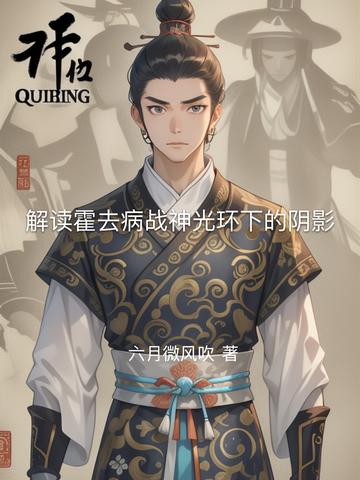
This work takes you through the mists of history to reveal the real Huo Qubing. The life of this famous Western Han general was full of contradictions and controversy. At just seventeen, he became renowned throughout the realm as the Champion Marquis, yet his glory concealed a more complicated truth. As Wei Qing’s nephew and Emperor Wu’s nephew by marriage, his rise was always shadowed by his family ties to the imperial clan. Emperor Wu even broke with convention, creating the office of Grand Marshal and General of the Agile Cavalry specifically to honor him.
Yet the other side of this heaven-blessed prodigy is lamentable. During expeditions into the desert, his supply wagons were loaded with fine wine and delicacies. Whatever he could not finish was simply thrown away, while the soldiers on the front lines often had nothing to eat. More shamefully, while his men went hungry, he amused himself by playing ball in the camp. The Li Gan incident further revealed his ruthless nature: because Li Gan had once wounded Wei Qing, Huo publicly shot him dead while out hunting. Emperor Wu’s cover-up of the affair exposed the darkness lurking beneath imperial power.
Sima Qian’s account in Records of the Grand Historian is thought-provoking. The historian, known for recording events truthfully, deliberately downplayed Huo Qubing’s military achievements while dwelling at length on his misdeeds. This distinctive narrative reflects not only Sima Qian’s distaste for the dominance of imperial relatives, but also his outrage at generals who showed no concern for their soldiers. Thus, this god of war, famed for “sealing the wolf at Mount Langju,” has always borne a complex reputation, both praised and condemned, throughout history.