Preface to Tales of Southern Ming
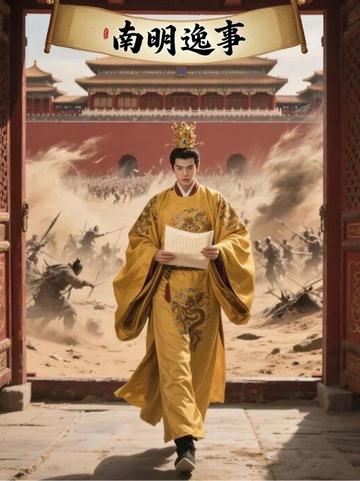
In the seventeenth year of the Chongzhen reign, an old locust tree on Coal Hill bore witness to the tragic end of the Ming dynasty. Emperor Chongzhen hanged himself, leaving behind the words, “Let the rebels tear my body apart, but do not harm a single commoner,” and casting the fate of the Han people’s realm into an unknown abyss. Yet history’s wheels did not stop turning. In the southern lands, the Ming dynasty’s surviving officials and subjects raised the banner of restoration. One Southern Ming regime after another sprang up like sparks, struggling to preserve the dynasty’s final bloodline amid the storm. Thus began the turbulent, blood-soaked history of resistance known as the Southern Ming.
The Hongguang regime was hastily established in Nanjing in an attempt to preserve the Ming’s legitimacy, but endless factional strife and rampant corruption caused it to collapse swiftly beneath the Qing army’s advance. The Prince of Tang, Zhu Yujian, poured his heart into the Longwu regime and vowed to restore the dynasty, but forces such as Zheng Zhilong kept him from putting his plans into action. In the end, he was defeated, captured, and starved himself to death. Then came the infighting between the Shaowu and Yongli regimes, further weakening an already meager resistance to the Qing. The Yongli regime endured the longest of all the Southern Ming governments, struggling to hold on through the storms. Li Dingguo’s victories over two princes electrified the realm and offered a glimmer of hope for the anti-Qing cause, but even that could not overcome the crisis on all sides. Finally, Emperor Yongli, Zhu Youlang, was strangled by Wu Sangui in Kunming, and the last gleam of Ming gold vanished into the dust of history.
This was a vast and devastating tragedy. Countless patriots gave their lives for the country and cause they held dear. They fought bloodily on the battlefield, argued their case in the court, and traveled behind enemy lines to rally support.

This book is an original work of Tomato Novels. Although the style is a novel, there is little artistic processing. In order to facilitate readers to understand the relevant history and read the chapters of the book, the historical context is explained in the preface and the relevant chronology is added to the appendix to annotate relevant events. In the process of creation, we consulted authoritative works and strived to be precise.