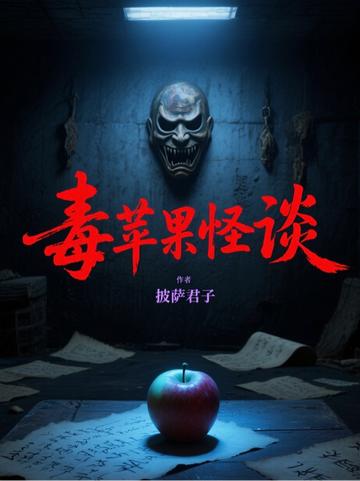
Qi Hongyu, a professor of folklore, received a letter with no postmark. The paper gave off the sweet, putrid smell of rotting apples. It bore just one line:
“The fruit tree has been hungry for twenty-two years. It’s time to feed it.”
Twenty-two years ago, her mother, Su Rui, a journalist, disappeared while investigating a mysterious ritual practiced by the Guoluo people on the Yunnan border. All she left behind was an incomplete notebook and a silver apple pendant. The last page of the notebook read:
“When the fruit tree begins to sing, the chosen will hear their own names.”
To find out what happened to her mother, Qi Hongyu ventured deep into the ancient Guoluo village with her assistant, Qin Chuan. Everything there was shrouded in eerie taboos:
The apples in the forbidden forest must never be eaten, or tree roots will crawl across your belly the next day.
On the night of the Moon Sacrifice, children under ten must hide in cellars, or they will be “taken by the fruit tree.”
The villagers fear the color red, yet wear blood-dyed robes during the ritual and dance around the withered sacrificial tree.
Even worse, Qi Hongyu discovered bark-like patterns appearing on her skin, while Qin Chuan’s camera captured something that should not exist: in the photographs, the villagers had no shadows beneath the moonlight.
That night, she heard her mother calling from underground:
“Hongyu… come beneath the tree… I’m waiting for you here…”
The village elder grinned, revealing rotten gums.
“Your mother fled the sacrifice all those years ago. Now the fruit tree wants you to pay her debt.”
The theme is novel and unique