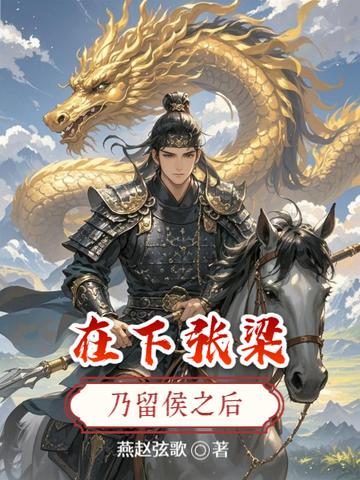
After Zhangliang, He Was the Queen of Liuhou
在下张梁,乃留侯之后
- Status
- Ongoing
- Length
- 1.1M Words
- Genre
- Historical
- Subgenre
- Historical High-Concept
- Audience
- Male
- Updated
- 6mo ago
- Source
- Fanqie
Stats
272Reads
7.6Score
448Chapters
47Listens
11.5kReads · all time
Tags
Synopsis
Reader comments
In booklists 155
Explore more →

The Complete Works of Romance of the Three Kingdoms
96.2MViews377Books8dUpdated
Civil Servants Hold Pens but Do Not Laugh at the People; Generals Hold Swords and Do Not Kill People.
Looking for this kind of book
92.7MViews468Books2dUpdated
The Top Ten Hammer Generals Rewarded at the Beginning of the Three Kingdoms
52.3MViews398Books8dUpdated
Three Kingdoms + Summoning System + Invasion Without Breaking the Bank
Three Kingdoms + Summoning System + Invasion without breaking the bank
33.8MViews177Books7dUpdated
Three Kingdoms, Self-Proclaimed King, Full Combat Power + System
33.2MViews411Books3dUpdated
The Completed Novel of Recruiting Dian Wei and Xu Chu to Travel Through the Three Kingdoms
The completed novel of recruiting Dian Wei and Xu Chu to travel through the Three Kingdoms
29.4MViews133Books22dUpdated
Looking for a Complete Masterpiece of the Three Kingdoms with High Scores, Not Systematic or Brainless
I'm in a shortage of books, please recommend me.
25.6MViews285Books3dUpdated
Three Kingdoms, Ruilin, Zhuge Liang's Younger Brother, Took Refuge with Boss Cao
21.5MViews231Books13dUpdated
Online Games-Three Kingdoms-Reality Integration
Three Kingdoms
20.6MViews119Books2moUpdated
Three Kingdoms, Train Ordinary People to Become God Generals and Fight with the Gods of the Three Kingdoms
Is there that kind of system
19.6MViews314Books1dUpdated
Travel to the Three Kingdoms and Defect to Cao Cao
Counselor or general
19.4MViews243Books9dUpdated
Three Kingdoms, with System, Summon Famous Generals, Summon Troops
You are like this. . . . . . . . .
17.8MViews353Books3dUpdated
9.6 Points the Three Kingdoms Period, the Novel About Gods
I would like to read a book similar to "Three Kingdoms: My brother Dian Wei starts with a tough fight against Lu Bu".
17MViews233Books2dUpdated
The Best Historical Article on Tomato at Present, If You Don't Agree, Come and Argue
I want to read a book similar to "About the Southern Dynasty's Noble Young Master I Impersonated".
16.1MViews190Books8hUpdated
Novels That Summon Historical Figures, Generals, and Counselors
Asking for books
14.4MViews301Books1dUpdated
The Work of the Gods! I Can't Help Myself in the Book.
14.2MViews298Books4dUpdated
I Have Read 4,000 Books, and All of Them Are Finished! Who Else!
14.1MViews285Books5dUpdated
He Can Assist Liu Bei in Both Literature and Martial Arts.
Don't be a self-proclaimed king or a thief
13.8MViews256Books3dUpdated
The Three Kingdoms Traveled Through Time Since Childhood and Were Born with Magical Powers and Did Not Strive for Hegemony.
12.6MViews211Books27dUpdated
The Counselors of the Three Kingdoms in Liu Bei's Camp
12.5MViews87Books2moUpdated
Three Kingdoms, a Book About Assisting Cao Cao as a Counselor
12.4MViews201Books3dUpdated
A Book That Prays for the Three Countries to Stand on Their Own and Finally Unify.
11.9MViews175Books2dUpdated
Three Kingdoms, Self-Reliance, System, Force
11.4MViews389Books3dUpdated
In the Three Kingdoms, Xiang Yu Uses Force in the Beginning and Fights with Lu Bu
Then went to Yingchuan Academy. I got to know Xi Zhicai Guo Jia and other counselors. I had read it before but forgot the title.
11MViews88Books1moUpdated
The subject matter and perspective are novel, with the Yellow Turban Zhang Liang as the reborn protagonist. It breaks away from the common perspectives of Cao, Liu and Sun in Three Kingdoms themes and chooses the Yellow Turban uprising camp to unfold the story, which brings freshness to readers and fills the gap in the depiction of the Yellow Turban group in the Three Kingdoms online literature. The rhythm design is very considerate. The author informs in advance that the first two volumes are about farming and development, and the third volume begins the expedition. He also reminds impatient readers to jump directly to the third volume. This takes into account readers with different reading habits, and the details are carefully considered. The rhythm is thoughtful, and the history and fiction are well blended! The farming and expedition stages are marked in advance, and you can skip reading to adapt to different readers; the text is solidly researched without losing imagination, making it enjoyable to read.
The combination of history and fiction is natural. It not only refers to historical materials such as "Book of the Later Han Dynasty" and "Three Kingdoms" to set the age and appearance background of the characters, but also reasonably adjusts the appearance time of the characters for the plot. The fictional creation is done within the historical framework, balancing the rigor of history and the interest of the story. The opening chapter has a strong sense of substitution, with a real-life scene of the protagonist being knocked unconscious by a wild boar, cutting into rebirth, and contrasting the chaotic times of the late Han Dynasty from the perspective of a modern social animal. The plot is light and humorous, allowing readers to quickly enter the story. The portrayal of the protagonist Zhang Liang in the opening chapter is more like a social animal, which can add details such as his inner struggle with the fate of the Yellow Turban after time travel, and his plans for the future, making the character more three-dimensional. The contrast of wearing Han Dynasty is so eye-catching! The story of "The Wild Boar Knocked Out" is down-to-earth, relaxed and humorous, and gives you the feeling of survival in troubled times in one second.
The beginning of the time-travel chapter is fast-paced, with the absurd plot of "being knocked unconscious by a pig" quickly cutting into the plot. The modern cognition of Zhang Liang, a social animal, is in sharp contrast with the ancient survival scenes in the mountains. The details of Brother Pei's honest and honest rescue work outline the local customs, and the description of the environment such as adobe walls and rough bedding makes the time-travel setting come true. The sense of dislocation from the shopping mall to the ancient village, the instinctive action of "touching the mobile phone" and the real feeling of chest pain accurately poked modern people's curiosity and sense of substitution in time travel, laying a vivid foreshadowing for the subsequent survival story.
The rhythm control is awesome! A small climax in one chapter, which makes people unable to stop at all. The main plot is clear, and the branch plots are also exciting. It doesn't make people feel cluttered. The author's narrative ability is amazing. This is what a high-quality novel should be like! The author's imagination is really amazing! Who would have thought that Zhang Liang in the Yellow Turban Uprising in history would be a descendant of the Liuhou who strategized? This setting immediately made the character stand out - he not only has the strategy and wisdom inherited from the Liuhou lineage, he can make a step forward in the surroundings of the princes, but also has the decisiveness of a hero in troubled times, never procrastinating in the face of desperate situations. The description of "Liuhou's inheritance" in the book is full of details. The ancestral military strategies, the hidden secrets of talismans, and even Zhang Liang's wisdom in life have become Zhang Liang's trump card in the troubled times. Every time he uses his wisdom to reverse the situation of the battle, everyone is amazed. The background of the Three Kingdoms is also restored to a very high degree, but there is no lack of novelty. The beacon fire at Hulao Pass, the undercurrent of Luoyang City, and the political confrontation between princes and alliances. Every historical scene has a strong atmosphere of troubled times, which makes people feel instantly involved. However, the author did not stick to the official history, but used the identity of the protagonist to bloom new flowers in the gaps of history - Zhang Liang is no longer a supporting role in the Yellow Turban Uprising, but relies on the wisdom of Liu Hou to integrate forces and deal with various princes. He must not only deal with the imperial court's encirclement and suppression, but also resolve internal disputes. This kind of "rewriting fate" plot is simply a highlight for historical fans! The character creation even escapes the trap of facial expression. The protagonist Zhang Liang is neither holy nor reckless. He makes decisions before taking action. He can calmly plan even if he is in a desperate situation. This kind of protagonist with an online IQ is really popular! The supporting characters also have their own highlights, including loyal generals, princes who are both enemies and friends, and clever counselors. Each character has his own position and calculation. Their confrontation with Zhang Liang makes the plot twists and turns. Moreover, the author understands the preferences of Tomato readers very well and leaves enough suspense at the end of each chapter, making people unable to help but click on the next chapter and unable to stop at all! The most rare thing is that this book not only pursues a sense of pleasure, but also contains thoughts on "inheritance" and "morality". As a descendant of Liuhou, Zhang Liang must not only protect the glory of his ancestors, but also stick to his true heart in troubled times. His choices and struggles give this troubled hero a little more warmth. In addition to the refreshing plot, you can also feel the weight of history, which is really far beyond ordinary refreshing novels! Brothers who like the theme of the Three Kingdoms and historical imagination, hurry up and rush to Tomato to read "After Zhang Liang, but after Liu Hou"! Descendants of Liuhou travel to the Three Kingdoms and outwit the heroes. This kind of cool story is really hard to find!
A masterpiece with more than 6.8 Points. The author's historical and cultural heritage is far beyond comparison with that of a non-professional and amateur like me. I can be considered a history buff, and I feel extremely ashamed in front of the author. Zhang Liang's opening position is indeed very novel, and he also considers the development route of the Yellow Turbans from another angle. Overseas development, based on Hebei and Liaodong, is a one-step move. In addition, the relationship between characters is well handled, such as Tian Feng, Zhao Yun, Guan Yu, etc. It also explained many unknown details such as Li Ying and He Yong. There are also many little people who have passed by in history. It fully reflects the author's profound background. There are also some small details such as titles and communication words, which are all well written. As expected, the ratings went up. As expected of my Yanzhao brothers.
This work is undoubtedly a masterpiece that achieves a high degree of unity in both literary and ideological aspects. Its grand and exquisite worldview construction provides a solid and tense stage for the story. The plot structure is sophisticated and dramatic, with natural and smooth transitions. Every turn is both reasonable and unexpected. The progressive suspense settings and relaxed rhythm control jointly build an immersive narrative space. In terms of character creation, the character image is full of flesh and blood and has multiple dimensions. The author is good at using various description techniques such as the character's appearance, language, behavior, psychology, etc. To make the character's personality complexity and clear growth trajectory very convincing. The intricate but well-organized relationship network between the characters, as well as the choices they make in moral dilemmas and fateful decisions, greatly enhance the reality and resonance of the story, and trigger readers to think deeply about the multi-faceted nature of human nature. The author's writing style is precise and expressive, and his language combines poetic beauty with the texture of life. The descriptions of the scenes, atmosphere and subtle emotions of the characters are extremely vivid and delicate, giving the text a strong visual sense and appeal. What is particularly valuable is that beneath the surface of the wonderful story, the works contain profound insights into grand propositions such as human nature, society, or the meaning of life. These thoughts are not rigid preaching, but are integrated into the plot and the fate of the characters like salt in water. They can not only deeply touch the readers' hearts, but also bring long aftertaste and enlightenment after closing the book. The whole novel has reached a high degree of harmony and unity in terms of artistry and ideology. It can be said to be a sincere work that can arouse widespread resonance and be worth reading again and again1
I read this opening chapter in one go and couldn't help but be amazed! The author uses the humorous setting of "Lottery Distribution Center" to break the theme, cleverly resolving the inconsistency of the time-travel theme, making people smile. The protagonist Zhang Liang transforms from a modern social beast into the younger brother of Zhang Jiao, the leader of the Yellow Turban Army. This identity setting is both historically accurate and full of dramatic tension. The most exciting thing is the portrayal of the psychology of time travel - when Zhang Liang realized that he was on the eve of the Yellow Turban Uprising, his inner monologue of "I had no choice in my previous life to be a social beast, but in this life I want to be a good person" is both humorous and profound. The introduction of the "Dad Civilization" system is even more magical. It cleverly combines the Internet meme of getting stronger with krypton money and survival in troubled times, making people look forward to the follow-up development while being hilarious. The author's writing style is sophisticated, using details such as "horseshoes" and "repeating crossbows" to create a realistic and perceptible time and space of the late Han Dynasty, and also creates contrasting laughter through the modern elements of the system mall. The interaction between Zhang Liang and Su Shuang is vivid and natural, which not only demonstrates business wisdom, but also lays the foundation for the subsequent development of power. This kind of writing power that perfectly combines the richness of history with the refreshing feeling of online writing is really amazing! The protagonist shows the potential of a hero at the beginning, coupled with the arrogant and funny system, it will definitely set off a new storm on the magnificent stage of the late Han Dynasty. Highly recommended to readers who like historical themes and light-hearted humor, this is definitely a masterpiece worth following!
This work cleverly combines the background of the Yellow Turban Uprising in the late Han Dynasty with fictional historical interpretation. After the author reborn Zhang Liang as a Liuhou, he not only had a sense of historical significance, but also gave the protagonist a reasonable golden finger - a "weak system" to avoid the routine invincible flow. Especially the construction of Xiaquyang and the creation of Jizhou's basic base, the details are real and perceptible, making people seem to see the rise of a stable place in troubled times. The plot of the Yellow Turban Army going north and south and exploring overseas has broken through the traditional Three Kingdoms structure and is refreshing.
"After Zhang Liang, I stayed behind the Marquis" is a refreshing novel about Yellow Turban farming in the late Han Dynasty. The protagonist is reborn as Zhang Jiao's younger brother. He starts with a "weak system" and does not blindly follow the old path of the Yellow Turbans' quick defeat. Instead, he plays a steady and step-by-step strategy of "building walls high, accumulating grain widely, and becoming king slowly". He rescues Guan Yu, recruits Zhao Yun, grows high-yielding crops, builds paper workshops, and seeks a way out for Taiping Road step by step. The first two volumes lay the groundwork for farming and development. They have both the thrill of system exchange and the passion to rewrite history. They combine the pragmatism of surviving in troubled times with the heroic passion of opening up new territories. The pace is relaxed and moderate, and it is worth reading.
The writing style is exquisite and very good. It combines classical Chinese + popular language. It has the characteristics of ancient Chinese and makes people feel old. However, Zhang Liang laid too much groundwork in the early stage. As a reader, I definitely hope to enter the real Three Kingdoms period as soon as possible. Of course, I also hope that the author can create in his own way.
I love watching it, I like watching the interaction between Xiao Liangzi and the system [laughing] [laughing] The interaction between the two is so joyful hahahaha, but Tongzi also spoils Xiao Liangzi and responds to every request. This is [laughing] early stage farming, the plot is not tense, but it is very immersive, the writing is very good, and the writing is excellent. I think the friendship between young people is the purest and most passionate. I love to see a group of young people talking about their plans to conquer the world. It's a pity that we can't go back to our youth. Although Xiao Liangzi is said to have traveled through time, his EQ and IQ are online, and he is also very... Well, how should I put it, smooth? In other words, it's a masterpiece. The characters are well created and the plot is compact. I like watching it. What I like the most is the interaction between Xiao Liangzi and Tongzi. Unfortunately, Tongzi appears less and less in the future, but this also represents Xiaoliangzi's growth. Come on, work hard, and wish it a great success!
From the perspective of rebirth or soul passage, the Yellow Turban tells the story of the complicated and chaotic war years in the late Eastern Han Dynasty, when the heroes were divided and divided. The sky is dead, the yellow sky should stand, and the age of Jiazi will be good for the world. The heroic general Zhang Liang, punishing crimes on behalf of heaven, launched a challenge to this unfair world. He was the aspiration of the people and the hope of the people. He acted as a teacher of justice and restored a bright future for the poor people. The subject matter is very novel and breaks out of the conventional Liu Bei and Cao Cao perspectives. The writing is delicate, the plot is smooth, and the concept is clever. It is highly recommended [like][like][like]
When Zhang Liang's political gene was injected into the historical body of Yellow Turban leader Zhang Liang, a new window was opened that subverted the traditional Three Kingdoms narrative. This unsystematic and logic-heavy text about farming power breaks away from the stereotyped perception that "the Three Kingdoms are all a stage for aristocratic families" and reconstructs the troubled times of the late Han Dynasty from a unique perspective. It has both a sense of historical depth and a sense of narrative exhilaration. The most dazzling innovation of the novel lies in the exquisite setting of the protagonist's identity. It has both Zhang Liang's "strategic planning" strategy and the heroic spirit of the "generous tragedy" of the people of Yan and Zhao. This setting makes the rise of farming no longer a simple technological crushing, but a dual parallel between strategy and strength. Nice! Hope to see the finale!
The writing of this book is exquisite, and the historical facts and innovation are cleverly combined. The setting is particularly eye-catching: the protagonist Zhang Liang uses the golden finger of "system" to embark on a solid path to the rise of farming. The construction of Quyang is described in detail. The Yellow Turban Army's idea of finding a new way and exploring overseas breaks through the inherent framework of the subject matter, and interprets a refreshing legendary story based on the heavy historical background.
"After Zhangliang, After Liuhou" takes time travel as a guide and writes a new chapter for the Yellow Turban Uprising in the late Han Dynasty. The protagonist, Zhang Liang, is a descendant of Liuhou, and brings a weak system to the troubled times. He recruits Zhao Yun, rescues Guan Yu, takes root in Jizhou and secures the basic territory. He also crosses the sea to conquer Goguryeo, goes south to expand Jiaozhou, and ignites the Yellow Turban fire throughout East Asia. The author uses grand historical imagination to break the traditional narrative of the Three Kingdoms. It includes both the bloody battles and the strategic layout of expanding the territory. It is a hearty read and can be called a highly imaginative and exciting novel about the struggle for hegemony in the late Han Dynasty!
The author uses powerful writing skills to integrate time-travel literature with the weight of history. The plot is expressive, the description is delicate and vivid, and the writing style is relaxed and humorous, and the protagonist's growth line is vividly outlined. Like.
This is a novel and interesting time-travel novel. The author has a wide-open mind, the story is rich and colorful, the plot is ups and downs, the writing is brilliant, and it is very immersive. My favorite novel, highly recommended! [Praise]
Zhang Liang, who is written by Da Da, has a resourceful background as a descendant of Liuhou. He is reborn in the late Han Dynasty as the Yellow Turban "General", recruits Zhao Yun, saves Guan Yu, abandons the Central Plains to compete for the throne, and chooses to farm overseas. The plot is subversive but logically consistent. The text combines the generosity of the Yanzhao context with the fluent narrative, blending the passion for survival in troubled times with the pattern of opening up new territories, giving the tragic hero a new lease of life, and you can't stop reading!
Well, how can I put it this way? The author has great literary talent. After reading the whole book, I gained a lot of historical knowledge and saw many interesting souls. This is one of the best works in a million and it is worth recommending.
This time-travel novel has a novel setting. The protagonist's soul has passed through the Yellow Turban Army Zhang Liang. The plot revolves around how he uses advanced cognition to break the situation. It not only connects the historical context, but also adds to the arc of the character through the line of "making a good relationship". There is no redundant foreshadowing, and the pace is bright. Watch Zhang Liang change his life against the odds and help the Yellow Turban Army get out of decline. The exciting points are dense and the logic is online. It is a masterpiece with both a sense of history and a sense of excitement.
It's so well written. This is a historical novel with a relaxed and humorous style. The writing power perfectly combines the historical depth with the refreshing feeling of online writing. It's really amazing! The plot advancement design of each chapter is great, and the character portrayal is very delicate. It is a rare and good work, highly recommended!
This briskly written Three Kingdoms travel story begins with the Yellow Turban villain "Zhang Liang" being turned into a farming boss with a system. The cool point of recruiting Zhao Yun to save Guan Yu is given easily. The idea of "overseas expansion" breaks out of the old routine of fighting for hegemony in the Central Plains. Even the system follows a "weak" grounded line. It reads like a "historical script modifier" without losing the fireworks. It is suitable for readers who want to change the perspective and enjoy the Three Kingdoms~
A great novel. The author opens with an absurd plot. The ancient and modern scenes form a contrast. You can also learn a lot from it. The author's writing style is delicate and the plot is compact and high-energy. It is worth reading.
Everyone who has stayed here knows that the author is very clever in setting up, calculating and calculating, eye-catching and unique, the characters are successfully portrayed, the three-dimensional is clear, the plot is compact, and there is a degree of relaxation. It is really good [like][like][like][like]
The ideas in this article are so on point! The protagonist takes a fresh path at the beginning, and the rhythm of collecting and expanding the territory is exciting. It does not lose the energy of the end of Han Dynasty, but also gives enough excitement of opening up the frontier. The writing is so smooth that people want to follow it in one breath.
A very enjoyable masterpiece, the masterpiece of Farming in the Three Kingdoms, yyds, I have been reading it, it is really enjoyable, I haven't finished it yet, my comment is mainly to see how long I have read [laughing][laughing][laughing] This book about farming in the Three Kingdoms is really super good. I'm going to read it for the second time [Love] [Love] [Love] [Love]
Focusing on the bloodline inheritance of Liuhou, it writes about the power game in the disputes at the end of the Han Dynasty. The plot has a neat rhythm, Zhang Liang's wisdom and pattern are clearly depicted, and the historical background is rich. The more you read, the more you read, it is a masterpiece of power and strategy. It is a good book [Like][Like][Like] The descendants of Liuhou are unparalleled in their wisdom, they can plan the world, and they can control the troubled times step by step!
The core charm of the story is "inheritance" rather than "reproduction". Zhang Liang possesses the strategic genes engraved in the bones of the Liuhou family - the unfailing layout in the face of danger, the acumen of insight into people's hearts, and the wisdom of leveraging strength, just like Zhang Liang's demeanor of "strategizing and winning thousands of miles away"; but he has also escaped the shadow of his ancestors, and in the cruelty and absurdity of troubled times, he has the stubbornness and passion of a young man. He may use his ingenuity to solve the problem, but he disdains conspiracy and deceit; he bears the honor of his family, but he is more willing to protect the common people with his own power. This kind of "wise but not treacherous, brave but not reckless" personality gives the identity of "the queen of Liu Hou" a vivid landing, rather than a floating label.
During the Three Kingdoms period, things were really turbulent and talented people emerged in large numbers. The author's name is Yan Zhao Xiange, which shows that he is a chivalrous person, as expected. The writing is very bright! The protagonist is not Liu Guanzhang, but Zhang Liang, who travels through time with the system, but more importantly with his brain, all kinds of knowledge and concepts learned in modern times. It is worth reading about the Three Kingdoms from a different perspective.
The plot is a "Yellow Turban Counterattack" feast of intrigue, with a solid rhythm and a grand layout. From taking root in Quyang to build the basic base of Jizhou, to gathering Zhao Yun and rescuing Guan Yu, to the collection of famous generals, to the Yellow Turban Army going to the north to conquer Goguryeo, and going south to colonize Ao Island to expand territory, every step is interconnected and progresses layer by layer. It breaks away from the stereotype that "the Three Kingdoms are all a stage for aristocratic families" and reconstructs the troubled times of the late Han Dynasty from the perspective of the Yellow Turban. It not only has the delicate details of farming construction, but also has the thrilling feeling of opening up new territories. It allows readers to witness how a Yellow Turban general changed his destiny against the odds in the game of power and expansion of power.