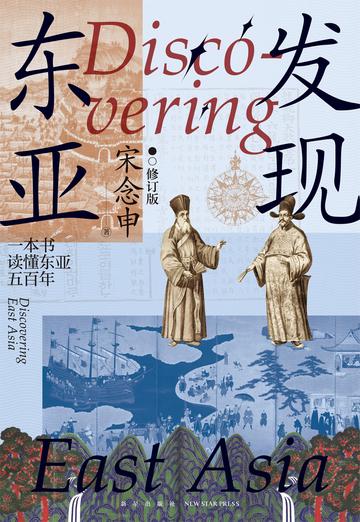
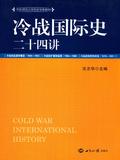
★ A celebrated work by a Tsinghua professor: a new history of East Asia after 1587, offering an accessible guide to five hundred years of East Asian history
Taking a global-history perspective on East Asia, the book reconstructs the winding process by which “China” became “China,” and China, Japan, and Korea came to be known as “East Asia.”
A top-ten finalist for the Wenjing History Writing Award, recommended by renowned scholars at home and abroad, including Hamashita Takeshi, Li Bozhong, Lu Yang, Luo Xin, Sun Ge, and Yang Nianqun!
★ Break through prejudice and overturn conventional wisdom to rediscover the East Asian world we thought we knew
Did the Qing dynasty really “stagnate”? Was Japan ever truly “closed off”? Was “Asia” an alternative tradition collectively invented by modern people? The concept of “China” did not take shape until as late as the Qing dynasty!
Between East Asia and Western Europe, which represents civilization and victory, and which ignorance and defeat? Should we condemn the injustice of the aggressors, or the lack of “progress” among those they invaded? What we call “consensus” is actually just prejudice, haunted by the specter of Eurocentrism.
★ Respond to the concerns of our time through history and trace the roots of East Asia's modern dilemmas
“East Asia” is at the center of today's debates: educational rat races, family trauma, gender struggles, and mental exhaustion. Discussions around East Asia are everywhere. Why are we “East Asian,” and what does “East Asia” mean to us?
“To ask what East Asia ‘is’ is, in fact, to explore a kind of representative collective memory shared by East Asian people.”, Song Nianshen
★ A refreshed hardback cover, an expanded preface and new chapters, a thorough revision, and 28 color illustrations
[About the book] The concepts of “China” and “East Asia,” which we now take for granted, emerged only relatively recently. The former gradually took shape during the Qing dynasty, while the latter has been familiar to us for only about 130 years. The East Asian world we inhabit and think we know is actually filled with myths and prejudices, and it remains to be rediscovered and understood.
This book explores the transformations, upheavals, clashes, development, and mutual shaping of East Asia since the sixteenth century. Beginning with the 1592 Imjin War during the Wanli reign, which ushered in East Asia's modern era, and continuing through the region's present-day turn, scholar Song Nianshen examines the historical record from a global perspective. He retells stories obscured by prejudice, reveals the truth between black and white, and maps the historical contours of a region called “East Asia,” explaining how history unfolded across this area over the past five hundred years.
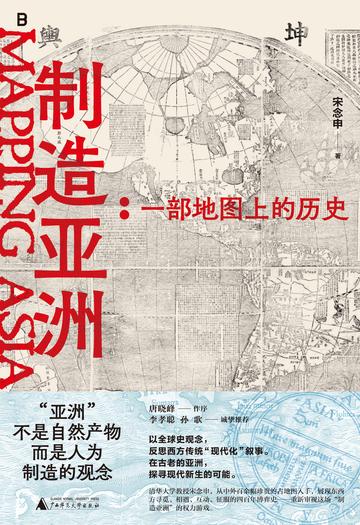
[About the author] Song Nianshen is a professor at the Institute for Advanced Studies in Humanities and Social Sciences and the Department of History at Tsinghua University. His works include Making Borders in Modern East Asia: The Tumen River Demarcation, 1881–1919 (Cambridge University Press, 2018) and Discovering East Asia. His research focuses on modern and contemporary Chinese history, borderlands, and ethnic groups from global and regional perspectives.