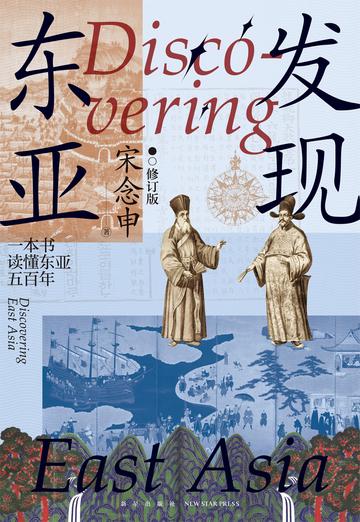
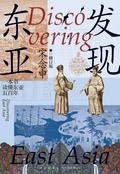
★A well-reputed work by a professor from Tsinghua University, the new history of East Asia after the fifteenth year of Wanli, one book to understand five hundred years of East Asia
——Look at East Asia from a global historical perspective and reconstruct the tortuous process of "why China became "China" and how China, Japan and South Korea became "East Asia"."
——The top ten works of the Wenjing Historical Writing Award, highly recommended by well-known domestic and foreign scholars such as Takeshi Hamashita, Li Bozhong, Lu Yang, Luo Xin, Sun Ge, and Yang Nianqun!
★Break prejudices, subvert common sense, and rediscover the East Asian world we thought we were familiar with
——The Qing Dynasty did not "stagnate" and Japan never "locked itself off"? "Asia" turns out to be an alternative tradition collectively invented by modern people? The concept of "China" was not finalized until the Qing Dynasty!
——East Asia and Western Europe, who represents civilization and victory, and who represents ignorance and failure? Should we blame the aggressor for being unjust, or the one being invaded not being "advanced" enough? What we call "consensus" is really just prejudice, with the specter of Eurocentrism lingering in its wake.
★Use history to respond to the mood of the times and trace the source of East Asia's modern dilemma
——"East Asia" at the cusp of the storm: educational involution, family trauma, gender dilemma, mental internal friction... There are endless public opinion topics surrounding "East Asia": Why are we "East Asia"? What does "East Asia" mean to us?
"Discussing 'what' East Asia is is actually exploring some kind of representative collective memory of the East Asian people. "——Song Nianshen
★The hardcover has a new cover, added preface and chapters, comprehensively revised text, and includes 28 color illustrations. [Introduction to the content] The "China" and "East Asia" we are accustomed to today are concepts that were formed only recently. The former was gradually finalized in the Qing Dynasty, and the latter has only become familiar in the past 130 years. The East Asian world we live in and think we are familiar with is actually full of myths and prejudices that need to be rediscovered and re-understood.
This book writes about the history of changes, turbulence, collision, development, and mutual shaping of East Asia since the 16th century. From the Wanli Battle of Korea in 1592, which started the modern process of East Asia, to the current East Asian turn, scholar Song Nianshen went deep into the historical process from the perspective of global history, retelling the stories obscured by prejudice, uncovering the reality caught between black and white, and painted a historical context map called "East Asia", telling how history unfolded in the area today called "East Asia" over the past five hundred years. [About the author] Song Nianshen is currently a professor at the Institute for Advanced Studies in Humanities and Social Sciences and a professor at the Department of History at Tsinghua University. He is the author of Making Borders in Modern East Asia: The Tumen River Demarcation, 1881–1919 (Cambridge University Press, 2018) and "Discovering East Asia", focusing on China's modern history, borders and ethnic groups from global and regional perspectives.