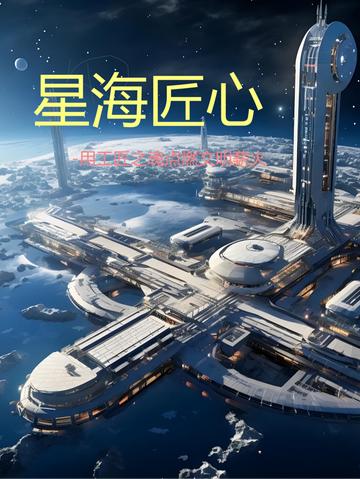
When the flying ribbons on the Dunhuang murals turned into rocket tail flames, Chen Feiyun, a paint apprentice abandoned by capital, held an ancestral porcelain piece in his hand and broke into the Wenchang launch site alone in the wave of the aerospace boom in 2016. From the cleaner who looked up to the first flight of the "Long March 7" to the "earth expert" who used the Mogao Grottoes mineral formula to overcome the engine coating problem, he was forced to be involved in the vortex of commercial space chaos and international technology blockade.
On the eve of the establishment of the Beidou network, the wisdom of the Northern Song Dynasty's waterborne observatory helped him decipher the dilemma of the space-borne atomic clock; at the critical moment of the construction of the space station, the secret art of gold foil of the Tang Dynasty gilded the "Chinese Flying Sky Pattern" on the moon; when near-Earth asteroids threatened mankind, cloisonné filigree technology became the final armor of the detector. From the Jiuquan Desert to deep space orbit, from the key frequency bands donated by smugglers to the oriental totems jointly carved by China and Russia's lunar stations, a group of little people used the soul of craftsmen to ignite the fire of civilization. What rose in the rocket was not only liquid oxygen and liquid hydrogen, but also a thousand-year look up from "Zhou Bi Suan Jing" to "Tianwen No. 1".