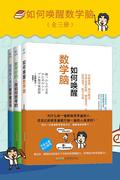
In the era of the Internet and AI, the definition of memory has changed from "how much you can remember" to "the ability to be good at using stored information." For memory, output is more important than input; if you can successfully play with input and output and obtain a "memory brain" that combines the human brain and the digital brain, then the efficiency of work and learning will increase tenfold or even a hundredfold.
"Memory Brain" will fundamentally change your understanding of the concept of memory. The author Shion Kawasawa has gathered more than 20 years of practical experience as a psychiatrist and provided more than 50 practical memory techniques. This will definitely allow you to optimize your brain in the AI era and improve the quality of work, study, and life.
Reader comments
After reading this book, I used a sentence in the book, the reverse Zeigarnik effect. This may be the first time I write a long book review. Since high school, my desire to express myself has never been stimulated like now. It's all the function of this book.
This book discusses the most important methods at the beginning. I think three points are the most important when it comes to writing storytelling techniques, and the fourth point is more supplementary. The first is to explain the reasons, the second is 5w1h, the third is to write reviews in time, and the fourth supplementary content is multi-sensory, and the most important multi-sensory ones are shadow reading and shadow writing. This is what I think is the most important part of this book. But other places are also very important. For example, his preview note-taking method in Chapter 3 captures the problem of our low efficiency. In summary, it is preparation. In addition to pre-study, preparation is also required, that is to say, understanding and organization must be carried out before memory can be memorized and repeated. This is something I didn't know before. I used to think that they were concentrated together. I feel like I will understand it if I put it in my own mind. I often make myself extremely exhausted. Chapter 4 mainly talks about your emotions, which allow you to understand your tension and then write some happy things in your diary. Chapter 5 is for you to go to social platforms, because not only do you pay attention to it, but you also constantly compare it, and other people then help you review it. By the sixth and final chapter, he tells you to make your to-do list, preferably in the morning, and then forget about it, like I am now, I almost forgot. This is the main content of this book. I found the first part of this book to be very helpful, and the second part to be of similar help. In fact, it didn't have the same enlightening feeling as the first part. I feel better after that, because I know that I can't use it incorrectly. The book Zeigarnik Effect also proposes many effects, such as one called Pareto, which is the 28-year-old effect. Later, he proposed three temporary disks for the human brain, which were of great help to me.
Okay, that's all I want to say. I will try hard to use the methods in the book and output more. This book is most suitable for students who do not have strong memory and adult readers whose memory has slightly declined. Without further ado, I am looking for another book by the author called Reading Brain. Bai~



After reading this book, I used a sentence in the book, the reverse Zeigarnik effect. This may be the first time I write a long book review. Since high school, my desire to express myself has never been stimulated like now. It's all the function of this book. This book discusses the most important methods at the beginning. I think three points are the most important when it comes to writing storytelling techniques, and the fourth point is more supplementary. The first is to explain the reasons, the second is 5w1h, the third is to write reviews in time, and the fourth supplementary content is multi-sensory, and the most important multi-sensory ones are shadow reading and shadow writing. This is what I think is the most important part of this book. But other places are also very important. For example, his preview note-taking method in Chapter 3 captures the problem of our low efficiency. In summary, it is preparation. In addition to pre-study, preparation is also required, that is to say, understanding and organization must be carried out before memory can be memorized and repeated. This is something I didn't know before. I used to think that they were concentrated together. I feel like I will understand it if I put it in my own mind. I often make myself extremely exhausted. Chapter 4 mainly talks about your emotions, which allow you to understand your tension and then write some happy things in your diary. Chapter 5 is for you to go to social platforms, because not only do you pay attention to it, but you also constantly compare it, and other people then help you review it. By the sixth and final chapter, he tells you to make your to-do list, preferably in the morning, and then forget about it, like I am now, I almost forgot. This is the main content of this book. I found the first part of this book to be very helpful, and the second part to be of similar help. In fact, it didn't have the same enlightening feeling as the first part. I feel better after that, because I know that I can't use it incorrectly. The book Zeigarnik Effect also proposes many effects, such as one called Pareto, which is the 28-year-old effect. Later, he proposed three temporary disks for the human brain, which were of great help to me. Okay, that's all I want to say. I will try hard to use the methods in the book and output more. This book is most suitable for students who do not have strong memory and adult readers whose memory has slightly declined. Without further ado, I am looking for another book by the author called Reading Brain. Bai~