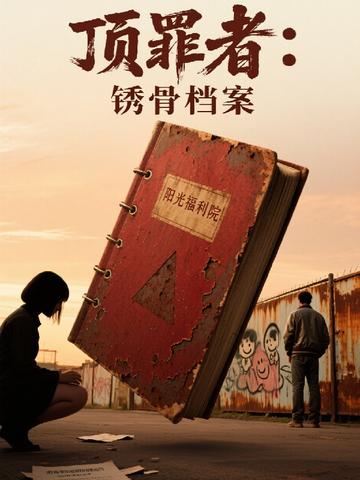
Seven skeletons in shackles are discovered at a construction site in an urban village. Their fatal wounds match the weapon from a family massacre three years ago: a bloodstained inverted-triangle badge that tears open the rusted-over truth.
Zhou Zheng, head of an inspection team from the provincial discipline commission, is ordered to investigate, only to plunge into a vast web woven by those in power. Chen Xiaoyu, the sole survivor of a mental hospital, has had her medical records falsified and her memories erased, leaving her branded a “madwoman” who murdered her family. Police captain Wu Yong, desperate to save his terminally ill daughter, becomes a lackey to the powerful, framing minors to take the blame and escape punishment. Zhang Hao, heir to a real estate empire, grins atop the skulls of the dead: “Killing migrant workers is as easy as killing dogs!”
Three nooses slowly tighten:
The inspection team’s anti-corruption case: Zhou Zheng uses the skeleton case to pry open an alliance between officials, business, and organized crime, only to face suspension, false accusations, and the silencing of witnesses.
The family massacre investigation: Xiaoyu’s “amnesia” is an act, she accidentally killed her mother, and the real murderer of her father is still at large, protected by a psychiatric diagnosis.
The migrant workers’ organ-trafficking chain: A child laborer’s diary exposes a bloody production line running from staged mining accidents for insurance payouts to organ removal in underground clinics. Its final stop is a children’s welfare home hidden beneath a charitable façade.
When evidence turns to ash in the flames and the law becomes a pass for the privileged, the ants dismissed as “rusted bones” decide to wield their bones as blades and cut open the city’s belly:
“Good people go to prison so you won’t have to learn how to kill.” Xiaoyu clutches her bloodstained school badge in court. Behind her, a sea of silent placards rises like bones still warm in a graveyard.


The rhythm is tight.