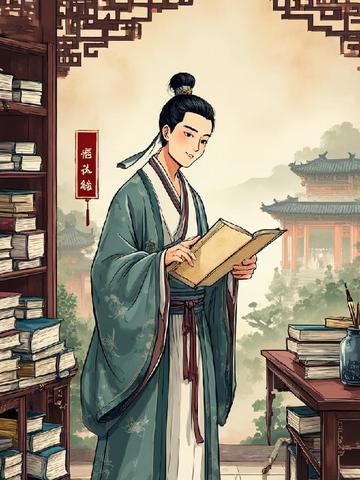
As a wisp of consciousness drifted away beneath the cold lights of a laboratory, Zhao Qixuan opened his eyes to find himself in a dilapidated study belonging to the Zhao family of the Huang Dynasty. Rain beat against the bamboo blinds outside, and the candle on his desk flickered faintly. Gazing at the yellowed Analects in his hands, he had only one thought: if he didn’t fight for a better life, he would waste away unnoticed in this side courtyard.
He was a marginal member of a collateral branch of the Zhao family’s main line. His parents had died early, his relatives were indifferent, and even the servants treated him with contempt. The imperial examinations were his only way out, but besides studying hard, he also had to contend with the family’s legitimate sons amid scarce resources and treacherous hearts. Then, one night, a vast library appeared in his dream. The Knowledge Vault System opened in his mind, turning modern science into classical commentaries and experimental data into remedies for governing the realm. He began weaving logical reasoning into Confucian exam questions and proposing new methods of governance in his policy essays, leaving the examiners astonished.
Yet behind every dazzling achievement lay his growing dependence on the System. He used chemistry to improve ink and paper, provoking the envy of his peers. He applied biotechnology to increase crop yields, only to be branded a heretic by the powerful. As his reputation grew, his choices became ever more difficult: should he settle for a safe career as a high-ranking official, or use all he had learned to shake the very foundations of the dynasty?
When he stood at the top of the palace examination rankings, with all eyes upon him, one question shadowed him: when a person possesses the knowledge to change an era, should he go with the tide, or be a solitary hero who swims against it?