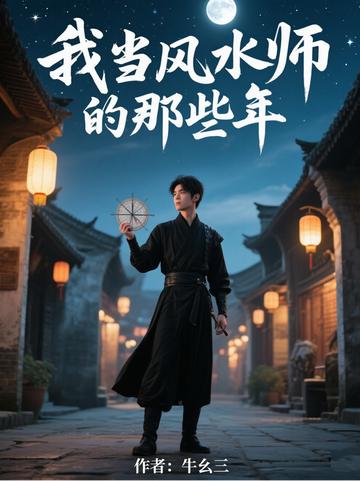
In a small mountain village in Wafangdian, Dalian, Liaoning, a boy named Zhang Hao was born in Lidian Village. From childhood, he learned by watching and listening to his grandmother, a spirit medium. He had seen ghosts and spirits, and he had seen the depths of human nature.
He was just an ordinary child until an unexpected “spiritual consultation” awakened his inner sight, drawing him into the invisible, unfathomable world between yin and yang.
Feng shui is more than compasses and blueprints. It concerns the shape of the mountains and the course of the water, as well as life, death, fortune, and misfortune. And a feng shui master is no fortune-teller making a living from predictions, but a guardian who challenges fate, defies Heaven, and knows when to hold back.
His grandmother’s final words made him understand that the words “feng shui” concealed a thousand years of unresolved karmic shifts.
From a broken house at the village entrance to mansions in the city, from ancient arts of Mount Longhu to lost secret texts, he moved deeper with every step and every move. Each formation he broke demanded a choice; every inch of ground he disturbed tugged at the threads of fate.
Yet he never forgot what his grandmother had told him:
“A feng shui master reads the human heart and bears the weight of karma.”
This is not a story about a boy with cheat abilities, but a true account of an ordinary person thrust between yin and yang, burdened with a legacy and struggling to grow.
The supernatural is never overblown, and Taoist arts are no fantasy.
This is the mysticism of the East, and a faith rooted in the land.
Looks great