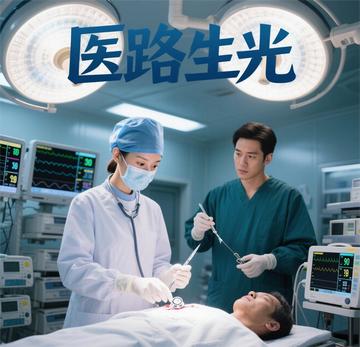
In the emergency room of a tertiary hospital in Haicheng, Su Wan, a 28-year-old surgical doctor, reached a turning point in his career on a rainy night. When she braved the risk of landslides, used a scalpel to cut open the reinforced concrete ruins, and took out the little girl whose heart had stopped beating from under the prefabricated board, the silver stethoscope deep in her pocket suddenly shimmered - it was a relic left to her by her mother who was a medical captain in aid to Africa before she died.
Three months ago, Su Wan's mother's words before her death, "A stethoscope can hear the gaps in life," became Su Wan's obsession. She competed with death in the ICU to perform the country's first "music analgesia" surgery on an autistic teenager; she stayed in a community hospital for two weeks and drew hand-drawn cartoons to open up the hearts of elderly people living alone who refused dialysis; and during a free clinic in Tibet, she carried an oxygen bottle through a pastoral area 5,000 meters above sea level to establish mobile screening files for children with congenital heart disease.
However, when Su Wan discovered that the department director had concealed the allergy rate of new medical consumables, she was forced to make a difficult choice between doctor-patient trust and workplace rules. At the duty desk late at night, she touched the word "Shen Du" carved by her mother on the stethoscope, and finally pressed the report button in the morning light. At the same time, Jiang Lin, the mysterious thoracic surgeon who always silently handed over hemostatic forceps at the rescue scene, was inextricably linked to the "Frontier Medical Innovation Project" that his mother participated in during her lifetime.