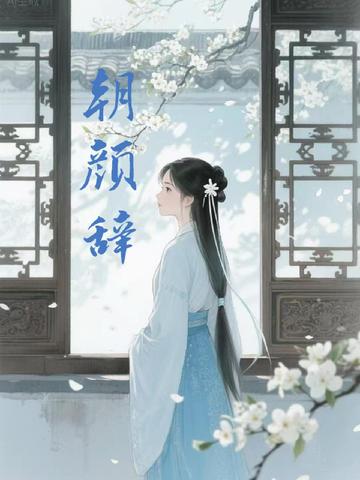
Farewell at Dawn
朝颜辞
- Status
- Ongoing
- Length
- 1.2M Words
- Genre
- Ancient Romance
- Subgenre
- Palace & Household Intrigue
- Updated
- 14d ago
- Source
- Fanqie
Stats
Tags
Synopsis
In booklists 7
Rated 9.9, Gets More Addictive with Every Chapter
I'm looking for something like Transmigrating to the Sixties for Thirty Years. Any genre is fine.
Highly Rated 9.9: Engrossing, Highly Readable Novels
Looking for content similar to "Transmigrate into the 1960s for Thirty Years." Any genre is welcome.

Follow for Follow, Likes for Likes (Book Recommendations Welcome)
I reply to every comment. Like once, get two likes back.
Demon Slayer!
Looking for stories like *Demon Slayer: Tokito Yuichiro Returns from Jujutsu Kaisen*. Preferably no romance.
Are Palace Intrigue, Political Scheming, and Ensemble Cast Stories All Gone?
Looking for stories similar to *I Hate Wearing White When I’m Killing People*. I want something like this one below. After reading it, I felt like my brain had grown, and I can’t get into anything else. Is there anything similar to tide me over?

Rated 9.9, Riveting and a Pleasure to Read: A Must-Read Masterpiece!
Looking for stories similar to *Transmigrate Thirty Years into the Sixties*. Any genre.
Falling in Love With This Place Through a Book, a Cup of Coffee, and a Work of Art
Looking for books similar to "The Autobiography of a Tomb Raider."
Reader comments 76
Google Translate
"Ci of Chao Yan·Gong Que Snow" The boudoir in the court palace locks her beauty, and the palace banquet stirs up the old relationship. The memories of the afterlife are hidden in the stars, and the power and plans of the past are turned into clouds and smoke. The beauty of the court is surrounded by flowers and trees, and the paper is stained with tears when the emperor's career is accomplished. Who is the truth, official history or unofficial history? A piece of paper makes up a thousand imaginary things. Combining "purdah" and "palace banquet" to highlight the beginning of the story, the setting of being involved in the turmoil of the court with memories of the afterlife. The ending of enlightening one emperor through the ages, with a sense of tragedy and fate. It also broadens the philosophical space of history and human nature. "Chao Yan Ci: Willows on the Palace Wall" The willows in the court house shed her unknown joys and sorrows The wind of the palace banquet opens the folds of fate The memory of the afterlife is a kindling In the dark night of intrigues, the shadow of the old dynasty burns out Chao Yan Ci, Hua Ci Tree She used her daughter's body to measure the emperor's territory Official history and unofficial history confront each other on the pages of the book Whose history is not fictional light and shadow? Being an emperor is like a monument, engraved with her name Those unsaid tears have become footnotes in history books ——Imaginary court, real struggle In a piece of paper, it becomes an eternal mystery The writing style is exquisite and beautiful, and the content is novel and innovative! The more I look at it, the more I get attracted to it ~ It's so fascinating! [Send heart][Send heart][Send heart][Send heart]
This work is an ancient strategy novel with a sophisticated setting. The work takes Chao Yan, the legitimate daughter with "memories of the afterlife" as the protagonist. It opens with a "banquet" and quickly throws her from the peaceful life of an "invisible person" into the vortex of "shadows" and "plans". Stories such as "Reprimand", "Recompense", "Assassination" and "Narrow Road" have clearly outlined the ups and downs of the plot and the shocking situations of the characters. The author's writing style is exquisite and the narrative rhythm is tight. He cleverly combines house fighting, women disguised as men, and the turmoil in the court. How Chao Yan went from forbearance to taking the initiative to break the situation, and finally moving towards the grand goal of "educating one emperor through the ages" constitutes the biggest suspense and highlight of the book, which is worth reading.
He stared at the Chaoyan flowers swaying gently in the night wind in front of him, and then thought of the figure covered in blood but blocking the bed in the run-down inn; he thought of Ming Jue, who was seriously injured and unconscious in the luxurious carriage; he thought of the tenacity of the girl Youzu Library for more than ten years and her determination to escape life... Could it be... An almost absurd, yet fatally coincidental thought wrapped around his heart like a vine. Could it be that... The "person who resolves the calamity" attracted by Chaoyanhua is not an illusory prophecy, but... The woman in front of her who is also called "Chaoyan"? ! The author writes so well, the setting is clever, the writing is delicate, the emotions are handled well, the writing is so awesome
History is inherently true and false, and no one can tell for sure, but the author tells an interesting and heart-warming past event. True or false is not that important. What is important is to be immersed in it and feel the characters' joys and sorrows, love, hatred, and hatred. That is enough!
This novel is really well written, cleverly conceived, and the plot has ups and downs, one after another, making readers unable to put it down while reading. Although the beginning of the novel is breezy, it is also fascinating. A royal state banquet is held to entertain foreign envoys. Officials of the fifth rank and above can participate with their families due to Emperor's favor. There was a royal talent show at the banquet, and it was also a large-scale free blind date, so all the governments were working hard. Chaoyan Que, the eldest daughter of the imperial family, disguised herself as a man just to not stand out... The author has good literary skills, the language is fluent and popular, and the descriptions are exquisite and exciting. It is worth reading and recommending, and giving it a five-star rating! The novel is really well written. I couldn't put it down as soon as I started reading it. I read it again today and I feel: it's worth reading!
Based on ancient proverbs about power and intrigue, the heroine Chao Yan is involved in palace disputes with her memories of the afterlife. From an invisible lady to an emperor who has taught for eternity, the fights in the house and the palace are intertwined, and the character growth collides with historical fiction, which is full of tension.
This novel brings a new twist to the ancient myth of power politics! The legitimate daughter of the court who lost her mother brings with her the memories of the afterlife. She becomes an invisible person because of a palace banquet, stirs up the chaos in the court, and finally educates an emperor for the ages. The plot line is tight and the growth line is clear. The heroine's sharp wits are so touching, and the intertwining of official history and unofficial history adds to the suspense. The author's writing is so great! I have forgotten how long I have been reading it. Let me comment first to see how long I have been reading it. It's beautiful, thank you to the author!
This ancient romance novel describes the character of a woman in troubled times. Shen Chaoyan plots every step of her life with grudges from her past life, and the disputes in the court blend with the love. The writing is delicate and has an ancient charm, the plot line is ups and downs, and the characters are vivid. It is worth savoring and savoring, and it has received five-star praise.
"Chao Yan Ci", the name alone attracted me. The writing is as delicate as silk, and the words are full of ancient charm. It's an amazing plot of ancient Chinese proverbs, full of suspense, ups and downs, and the characters are all full and three-dimensional. The official history and unconventional history are true and false. The more I read, the more I like it. I look forward to the exciting follow-up.
When I first read the text, I always thought it was just the ramblings of ordinary life. After careful reading, I discovered that the author's transparency and warmth hidden in the daily narrative are particularly moving. There are no ups and downs of dramatic conflicts in the text, and there is no accumulation of gorgeous and complicated rhetoric. It only uses plain brushwork to describe the fragmented scenes of the world, but it shows the most authentic appearance of life. It breaks out of the grand narrative framework, does not deliberately exaggerate suffering, nor blindly praises perfection, but directly faces the gains and losses, confusion and tenderness in daily life. Those simple insights are not condescending preaching, but sincere sharing after experiencing life, allowing readers to see their own shadows between the lines. In the impetuous moment, such words are like a good medicine. It reminds us that we don't have to chase the hustle and bustle of nothingness, cherish the fireworks in front of us, and accept the imperfections of life. Keeping your true heart in the ordinary and feeling the beauty in the trivial is the best state of life.