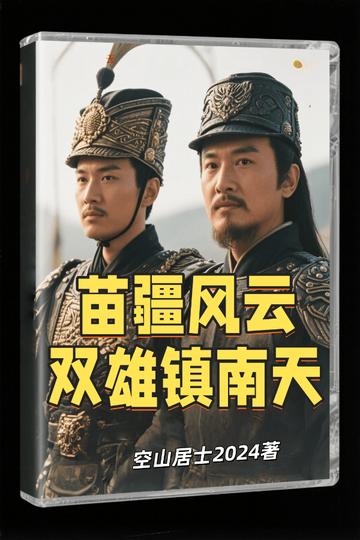
At the end of the Song Dynasty and the beginning of the Yuan Dynasty, the southwest border was in turbulent weather. The Miao barbarians in Thirty-sixth Cave in southern Guizhou were in trouble due to harsh governance. Zhang Hui, a Han minister of the Yuan Dynasty, and his son Zhang Huan were ordered to lead their troops into Pengshui Miao territory. In this land soaked in Wu Nuo culture and cinnabar blood and tears, the father and son faced the suspicion of the Yuan Dynasty and the grievances of the Han and Miao Dynasties. They used Zhang's family tradition "Three Character Classic" as their blade - "Keep a kind heart and follow the right path" and "Don't cause trouble and be not afraid of trouble." They carved a road to integration amidst the light and shadow of the sword.
Zhang Hui broke the economic blockade with "tea tax in lieu of cinnabar tribute" and used the "Miao-Han Medical Code" to resolve cultural barriers. However, Peng Shui died of illness on the way to the class and wrote the legacy of family tradition in blood. Zhang Huan inherited his father's ambitions, solved the puzzle of poison poisoning, fought against the conspiracy to cut down the vassal, married Miao girls, opened a school, established the "Three Orders of Sizhou", and melted Han military regulations and ancient Miao training into a spiritual totem of "Han and Miao are one". From the Blood Moon Ceremony at the Wujiang River Ferry to the Alliance bonfire at the Jiuli Altar, from the stone tablets in the cinnabar mines to the family style screen wall in Sizhou Government Office, two generations of father and son used swords as pens and blood as ink to write the legend of "Zhennan Tian" in the mountains and rivers of Miao territory.
The novel combines historical events and national legends, and uses the heroic trajectory of the Zhang family and his son to show the political game and cultural symbiosis in the southwestern frontier in the late Song Dynasty and early Yuan Dynasty. The lights of the Diaojiaolou in Pengshui, the hustle and bustle of the Miaojiang market, and the sound of the waves at the Wujiang stone dam have all become footnotes to the inheritance of family tradition - when the silver crown and the jade pendant are combined under the moonlight, when the Han and Miao children read the "Three Character Classic" and the "Miaojiang Ancient Song" together, a "Nantian spirit" that transcends ethnic groups is quietly born, turning into an eternal monument to protect the people.