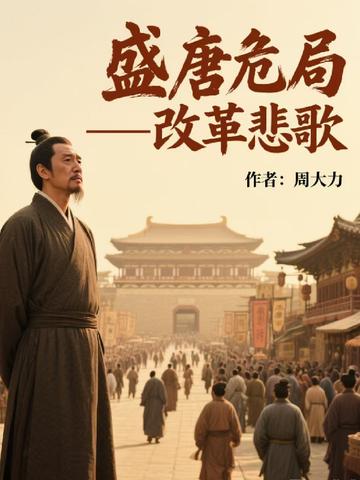
In the twenty-fifth year of the Kaiyuan era, the snow in Chang’an had yet to melt, while the starving people of Longyou had already gnawed through the last scraps of elm bark.
Zhou Minhao, a top student at the Imperial College, clutched the land-allocation register, its pages smeared with mud. His knuckles turned white. He had seen the horror of families in Jiannan forced to eat their own children, and heard the folk song in Luoyang’s markets: “The rich own fields without end; the poor have nowhere to plant a foot.” At last, he understood: the so-called golden age was merely gold leaf laid over festering sores.
It began when he helped a county magistrate recheck the land records. Then he uncovered secret documents showing that the powerful minister Li Linfu had falsified tax registers. His friend Li Yan turned against him, claiming he was “doing what was best for the family,” and a case involving disaster-relief grain, tied to the eunuch Cui Shouqian of the Court of Agriculture, dragged him into the whirlpool of palace intrigue.
When his words pierce through the page, and his sincerity shatters against political schemes, this scholar who once wept for the starving will, on the eve of the An-Shi Rebellion, use his “Strategies for the Welfare of All Under Heaven” to give the High Tang one last chance at survival.