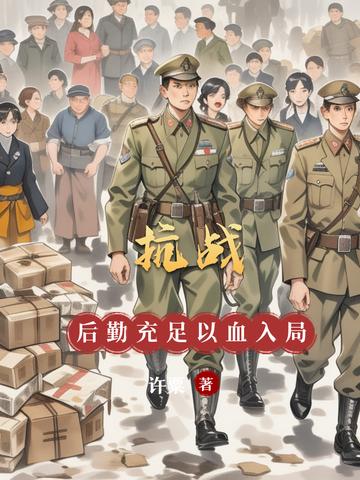
Anti-Japanese War: Sufficient Logistics, Enter the War with Blood
抗战:后勤充足,以血入局
- Status
- Ongoing
- Length
- 888k Words
- Genre
- Urban
- Subgenre
- War & Espionage
- Audience
- Male
- Updated
- 5d ago
- Source
- Fanqie
Stats
Tags
Synopsis
Reader comments
In booklists 15
9.9 Points, Worth Chasing All Night Long! ! !
I want to watch content similar to "Wanwan is not Wanwan: Who still loves you after being reborn". The plot is novel and exciting, and the more you watch it, the better it gets!
War, I Want War, a Big War, and the Protagonist Must Be a Monster.
Are There Any Novels About the Collision of Large-Scale War Armies?
Anti-Japanese Spy War Completed with More Than 3 Million Words
Anti-Japanese War 9.8 High Score Novel
I want to read a book similar to "Dragon: The Biography of Liu Gensheng". Anti-Japanese War novels, I like them
A Period Story That Travels Back to Around 1940. There Is Space or System.
Is There Any Novel About a Person Fighting Against Japan During the War?
Not Li Yunlong! A systematic novel about a person who travels back to the Anti-Japanese War
🌵Travel Through the Anti-Japanese War, Graduate from Huangpu, Save the Country Through Curves, and Shoot the Small Life
I want to read a book similar to "Spy War: A Thousand Faces of Agents, I'm a Team".
Tomato's Best Anti-War Novels
I would like to read a book similar to "The War of Resistance: Ballistic Traceless". He looks like he's fascinated, and his blood is boiling
Historical Texts (No Restriction on Dynasty, No System, Only with Brain)
I want to read a book similar to "Fanghua of the Great Wei Dynasty". Be smart about historical articles, otherwise your mind will be eroded if you read too many mindless articles.
Ceiling of Historical Novels
I want to read a book similar to "The Tang Dynasty: Only by Resistance Can You Become Stronger". I cried every time I read this book, and I have read it five or six times. I still cry now. I don't believe it at all. Some are better than him. I would like to call him the strongest in history! 8:09, Really low, give it a 9.
Is There Any Hardcore Military Literature?
I Have Been Sitting at the End of the Sea of Books for a Million Years, but There Is No Book Worth Looking Back On.
Dear Taoist friends, I have something to ask of you. I would like to use my friend's eternal misfortunes to find a copy of the masterpieces here.
See the latest chapter. Tell us your thoughts. This book is really a book that emerges from the mire but remains unstained among a large number of refreshing articles. I have been reading novels for so many years. My eyes lit up in the war category. The details of the army, the combat process, and the operation of the army are all brought to life by the author. Books that usually command tens of thousands of people and hundreds of thousands of people at every turn. It's really hard to describe. It can be said that this book is close to 90% of the reality. There is a problem. There is not enough fun for readers. A lot of descriptions of supporting characters can be added in the middle. So many battles were fought and so many people died. There are too many touching and touching stories that can be written in it. You can't just push the main line all the time. It will feel boring after a long time, but there is a lot of room for improvement. Come on, author. I hope it will be more exciting as you go to the back! Generally speaking, it must be regarded as a kind of fairy grass in the war category. Certified bookworm of ten years. Absolutely good book
Hardcore masterpiece! It's not like that kind of brainless system where you just open your eyes and do it. The description of the war is detailed and realistic. The protagonist starts out as the commander of the cannon fodder regiment of the national army. He has participated in frontal battlefields, fought brutal bloody battles with brutal Japanese soldiers, and annihilated enemies on the battlefield. It also revealed relevant historical background and overall strategic trends. The most important thing is the very hard-core description of team building, training and expansion! The author no longer limits war to just a few battles, but looks at the overall situation: how to replenish troops, how to ensure logistical supplies, how to train and grow new recruits, how to condense military discipline and thinking, pre-war mobilization, position layout, and even descriptions of relationships in the rear, etc. The author uses details to support the flesh and blood of the story. As the reading progresses, you can truly feel how the protagonist and his army build and grow step by step. The author is also good at letting us understand the protagonist's army from various angles through the description of small characters and the perspectives of others. There are veterans who follow the protagonist for various reasons, recruits represented by the characters in my regiment, enemy soldiers, ordinary civilians, and the perspective of big shots like Stilwell, Chief of Staff of the Allied China Theater in World War II. Through this kind of description, each character in the book comes alive, as if he has really returned to that era filled with smoke. There are also rare ones. Although some characters from My Captain, My Regiment have been incorporated into it, it is not a parallel world or an imaginary Anti-Japanese War story, but the real background of the Anti-Japanese War. It is even rare that the historical figures in it all use their real names or familiar nicknames. Instead of using some obscure code name to avoid Shen He who doesn't know who it is [laughing] The only drawback is that it's not enough to watch! I finished reading it in two nights. I almost stayed up all night [covering face]. Two updates a day is really not enough. Finally, I have a small suggestion. The war in the book is very cruel. In many chapters from the perspective of the company platoon leader or even the top soldier, the characters die within a few chapters. Although it is very normal and common in the protagonist's army in that era. But they are also heroes and martyrs. I hope that at the end of a battle when the protagonist remembers the fallen personnel or when the book is about to end, as an Easter egg, I can write about their lives. Even if each person only has a short two lines, it can deepen the impact on everyone and make them feel that they are also living people. Otherwise, after watching it for a long time, I feel that I have brought the protagonist into such a "cold-blooded" manner [laughing and crying]
The writing is very good, the adaptation is just right, and all the storylines are logical; the description of the war is also just right and delicate without being verbose, and the progression of the plot is just right - not too fast, not too slow, and does not stop at one thing or place for too many chapters.
The author's writing style is very good, the plot is not procrastinating, and his evaluation of the national government is also very accurate. It's just a pity that those who write about the Anti-Japanese War now either become famous or build a country overseas. This is not a helpless thing. In short, five-star praise [like][like][like]
This book is highly recommended! Both male and female readers can read it, and there is nothing surprising about it so far. There is no heroine, this is a strong recommendation! I don't see any flaws in the storyline. The golden finger is relatively small, which better complements the protagonist's military intuition and accuracy. First of all, the protagonist is an intellectual who serves as a soldier, not the kind of taxi driver or delivery boy who systematically gets rich and looks down on ordinary people! ! The protagonist is more self-disciplined, not the kind of person who stares at the big breasts of a female doctor and a female student in a hurry to marry a mistress and a third concubine and then makes excuses for herself! The protagonist is relatively strict, not nepotistic or duplicitous. A refreshing piece of drama.
This book should be said or not, it is really well written. Although many people say that it seems depressing in some parts, that is because you have not understood the real written records of the Anti-Japanese War. This book objectively restores most of the historical facts of the Anti-Japanese War. Although the real history is more cruel than what is written in this book. But this book is already a rare masterpiece that can be found in Tomato, and it has received five-star praise.
Absolute five stars. The book shows us the corruption and darkness of the National Government and the cruelty of the Japanese. Most of the articles were written about grassroots soldiers, describing the suffering of the people during the Anti-Japanese War. They join the military for different reasons but do the same thing. After reading it, I deeply realized the incompetence and corruption of the National Government. The characters are described in great detail. Every character and every class in the book is given a soul.
The writing is very good, and it fully describes the state of the national army, including the personal dependence of the national army, beating and scolding soldiers, and shooting deserters.
Great book! ! ! The protagonist has the ability to be a general and has the potential to be handsome and make progress. Goldfinger can be said to be ignored. It is not a cool novel, but it is a good one. As for many people saying that the protagonist is a group leader who cannot control his subordinates. Come on, the protagonist's group is not an old group. It has been reorganized several times. Also, this is the National Army, not even the Central Army. It's just a bunch of miscellaneous troops put together. What's the military discipline? Being willing to follow the protagonist and not run away is already very impressive. Many people regard this army as the Red Army. This discipline is not on the same level at all.
There are very few anti-war novels that can be read. This one is good. Well, what about the author? This book is a bit familiar. You can write a 1.8 Million chapter first and show it to me. So that I can watch it to my heart's content... No, just observe carefully.
It's really pretty. First of all, the writing is good, and the author's own knowledge is also very rich. He can not only describe the actions of the protagonist, but also intersperse various historical events with introductions, and the summary is simple and concise. The existence settings of the system are even more wonderful. It is not so big that it becomes a cool novel, but it can also provide support for the protagonist, and it will not affect the highlight of the protagonist. I think this book can also be called "On How to Build an Army". The protagonist accumulates experience and members from battles, and then uses various channels to cultivate the army. Reading from beginning to end, I felt very happy. It is similar to reading business novels. Every progress is extremely satisfying. The only bad thing in the early stage is the comments. Every time the protagonist fights, facing the objective gap with the Japanese army, and the protagonist suffers a slight loss, the protagonist is told not to fight hard, but to retreat, go to Myanmar to build a country, and become the king and hegemon. There is also a comment about the evil deeds of the national army, "Don't be too outrageous." I won't say who is outrageous. After destroying all the troops, I felt that the sky was about to fall. I felt that the protagonist was terrible. I mocked him for calling him the protagonist, which was not satisfying enough. I can't even read other people's serious analysis.
I have read many anti-Japanese war books, but none of them describe the situation of the Kuomintang troops at that time so clearly and truly. Without good reviews for the emotional line, how can there be so much time for love during a war? Come on, the author, I recommend eight updates a day. I really can't get enough [laughs][laughs]
It is a very realistic novel about the Anti-Japanese War. It is very interesting to read. At least there is no data collapse so far. The sources of weapons and equipment can also withstand scrutiny. It is very valuable. I just don't know if I can write about the War of Liberation [Eating Melon]
It's a good thing that Goldfinger is smaller, it's both sadistic and enjoyable, and the control is very good, because it's very heavy from the original work to reality. The most important thing is that the protagonist's character looks very good for the time being, because what the cannon fodder group needs is not a brother, but a leader
It is considered a high-quality article on the Anti-Japanese War. It mainly contains troops and a backer for an intelligence department boss. There are no weapons, no eyes, and no space. I personally think the views expressed are quite correct. It can be seen from the military views that the author has studied that period of history.
A good book that breaks away from clichés and is a true national anti-Japanese novel, not a warlord novel
Although it is a fanfic about My Leader, My Regiment, it does not stick to the main line. I guess starting with the leader is a starting point and the purpose of attracting traffic. At least it is much better than the books at the starting point that fought a few battles without a single casualty.
The writing is good, very good, much longer than some Chinese Expeditionary Force novels I have seen, very good, highly recommended, it feels more realistic. Don't be locked up in a dark room one day.
The writing is quite good. The protagonist is not omniscient and omnipotent, and does not apply the shallow experiences of later generations to that era to show off. He is integrated into that era, and the plot is relatively close to reality (the golden fingers are arranged just right, and there will be no magical plot). I hope the author can continue to maintain this quality.
It's delicious to savor carefully, it's beautiful to watch, you can understand the discomfort, and the more you think about it, the more you will realize the greatness of China now!
It's okay. If you just want to read novels, don't read it. If you want to read something realistic, you can read it. It's so miserable. It perfectly restores the tragedy of the Anti-Japanese War period. I'm leaving anyway. I read novels to relieve my boredom, not to add to my worries.
To be honest, I haven't seen such a good Anti-Japanese War-themed novel on Tomato for a long time. Although it has a small hook, it also describes the tragedy of the war in more detail. In the next second, the comrade who may have told you about it is suddenly hit by a bullet and dies in front of you. It more truly reflects the tragedy of our ancestors' Anti-Japanese War at that time.
It is a novel that has a sense of reality and immersion, unlike the anti-Japanese dramas and stories that bluntly consume the noble spirit. This novel recreates the history of that time from the perspective of a mid-level military officer. The characters are vividly drawn and the plot is reasonable, making it worth reading.
It was well written and made up for the regrets of the group leader. Everyone has a good ending. Doubi, everything is alive. The battle plot is brilliantly written, making people excited to watch it. Xu Su's personal description also made me really feel like an iron-blooded general. However, some historical figures appearing in the book are too derogatory and have no historical basis. It is just for fun to watch. There is no need to substitute it into reality.
The writing is very good. The supporting characters and the protagonist are not all written in the same voice. It is a utopia that is full of truth, goodness, beauty and belief. The author describes the human heart very delicately. The protagonist fulfilled the obligations of a qualified officer to his subordinates. He made his subordinates eat well and train well before going into battle, and there were good arrangements for injuries and sacrifices. His subordinates said that he Fighting with a cold heart, it is better to say that the protagonist has seen through it. Surrendering on the battlefield means death, retreating and running away means repeated death. If you sacrifice heroically, how many can you take with you when you die? If you fight bravely to kill the enemy and are still alive, you can protect your teammates and family behind you. Maybe you can even start a family tree here. Anyway, if you die, your death must be meaningful! Moreover, the protagonist did not waste people. Maybe it is too cold to say "wasting people", but on the battlefield, human life is just a number, and people are just things controlled by the superiors. The protagonist did not waste people's lives. He fought when he could and couldn't, but also tried to find ways to let his subordinates live more lives. It is a book worth reading!
The writing is very good, it doesn't feel like a cool novel, but there is a heavy hatred between the country and the family. The troops were wiped out, and they reorganized and kept fighting to drive the little devils out of China. The writing is very objective and true. The battle loss ratio is very real. You can take a look.
Good book. The system is only responsible for providing the protagonist with the logistical supplies that the Kuomintang will theoretically distribute. The rest is of no use. It is quite factual. I highly recommend you read it.
There are many points of interest in this book, but they can be roughly divided into two categories: One is the war on the home front, which everyone probably doesn't like to read. It's not that the writing is not good, but that it's too hateful and uncomfortable. It's like putting objective facts in front of you, and this objective fact is everywhere. You can't help but think: If there weren't these dirty moths... However, the protagonist will use more powerful methods to solve the problem, which can be regarded as an iron-fisted method with the protagonist's personal style. The first type is the war at the front, which everyone should like to watch more, because the changes are more intuitive: the bloodshed sacrifices and desperate resistance of the troops led by the protagonist will really change some things, and these things will gradually change the future.
It's not a big deal, it's relatively real, and it shows the hardship and cruelty of the Anti-Japanese War to a certain extent. At that time, the country was bought with human life and blood, every inch of mountains and rivers was worth every inch of blood.
It can be easily seen that the author has done a lot of homework. The details of the march are much more realistic than most of the articles. The occasionally interspersed descriptions from other perspectives are great, adding emotional details that are not described in the main text. It is this kind of detail that makes people burst into tears.