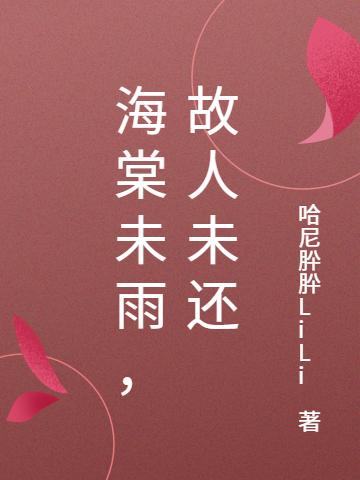
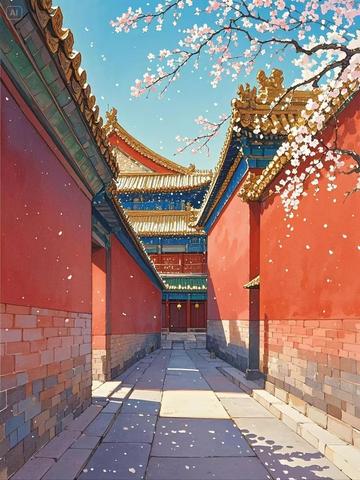
He was a revolutionary operating behind enemy lines; she was the “traitor’s daughter” who navigated the world of government officials. When he died in the Suiyuan Campaign, he clutched half a jade pendant in his hand. As Nanjing fell under bombardment, she sold her jewelry to buy a train ticket in search of him. When a letter from across the strait finally arrived in 1987, the words “Look in on Manqing for me” on its yellowed pages had already been blurred by fifty-eight years into blood and tears. It turned out that on the eve of the Xi'an Incident, he had asked Zhang Xueliang to deliver a confession he never sent, while the crabapple trees she planted in the courtyard of their old Beiping home bloomed year after year, never again to welcome the man who had promised, “In our next life, wait for me beneath the crabapple tree.”
For the sake of the nation, he ordered the destruction of her family’s arms depot. In prison, she suffered three miscarriages to protect his intelligence. When they reunited in peacetime, he was the wife of a founding hero, while she was only a senile old woman in a small town, gazing at a crabapple tree and murmuring to herself, her memory gone.
Caught in the violent currents of history and family feuds, their love, which began amid mist and rain and ended in old age, became an irreparable regret spanning a century. Like the snow that never melted outside the cave dwellings beneath the Great Wall, like the moon that never became whole over Nanjing’s Qinhuai River, like the crabapple tree in the courtyard of their old Beiping home, blooming year after year but still waiting for someone who would never return.