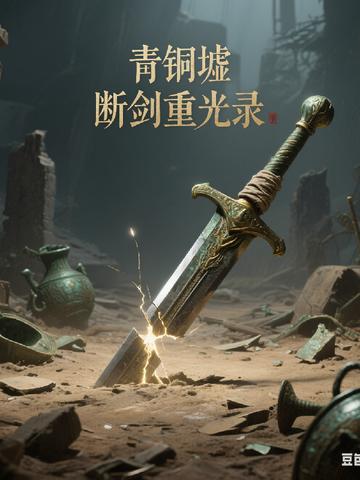
1217 BC, the Bronze Ruins of the Late Shang: Yanci Ruins, on the southern bank of the old Yellow River channel, was once the capital of the Dongyi Xuanniao tribe. It became a wasteland three hundred years ago after a mysterious natural disaster. While excavating the site, modern archaeologist Li Chenguang and his Bronze Civilization Expedition Team unexpectedly unearth a corroded bronze sword engraved with nine spirals. The “Xuanniao bronze inscriptions” on its blade match the legend of “the broken sword that seals the dragon” in a surviving fragment of the Classic of Mountains and Seas, “The Great Wilderness: East.”
As a vast “hanging coffin formation” beneath the ice and a “bronze star-chart instrument” in an underground chamber come to light, team member Lin Wanqing discovers that the sword’s patterns conceal an ancient calendar based on “celestial divisions and qi.” The expedition’s elderly tomb guardian, Uncle Ya, is always seen on moonlit nights making the gestures of the lost “Xuanniao Sword Art” before the sword’s shadow. On the night of the autumn equinox, when the Big Dipper’s handle points downward, the bronze sword absorbs the moonlight and reveals an inscription: “Blood Pact of the Human King.” Memories of the Xuanniao tribe’s high priest, who forged the sword with his soul and sealed the Yellow River’s floods a thousand years ago, surge into Li Chenguang’s mind through the blade’s resonance. He sees himself three thousand years earlier, thrusting the broken sword into an altar shaped like a dragon’s head.