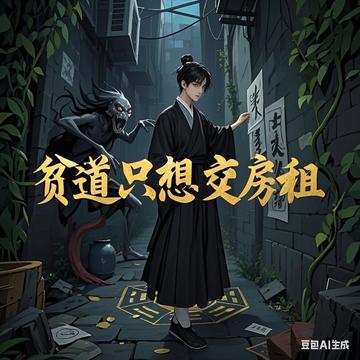
Protagonist: Zhang Xuan (Taoist name: Xuan Weizi), male, in his early 20s. He is an orthodox descendant of Longhu Mountain, but he grew up in the mountains and is extremely lacking in modern urban life experience (severe social fear, does not understand electronic payments, and knows nothing about popular culture). He is strong in Taoism (especially good at talismans and formations), but he is lazy, greedy for money (because his teacher is poor), a little clever, and complains about his responsibility. He was ordered by his master to go down the mountain to "experience the world of mortals and accumulate merit." In fact, the master thought he was too good at eating, so he sent him down the mountain to solve his own livelihood problems.
World view: The modern city looks bright on the surface, but in reality there is an undercurrent. The spiritual energy is thin, but resentment, obsession, and desire breed, forming all kinds of weird "urban spirits" and "social evil spirits." Traditional ghosts and monsters have also kept pace with the times and put on modern clothes (such as: Internet addicts who are addicted to the Internet, earth-bound spirits who died suddenly in 996 at work stations, obsessive spirits of fans who are crazy about chasing stars, and "internal demons" who make a living by feeding on anxiety). Ancient forces such as Taoism and Buddhism have declined and are operating independently, and some have even attempted "commercial transformation" (such as opening Feng Shui consulting companies and selling Kaiguang electronic products).
Style and tone: Mainly lighthearted and funny. The core driving force is that the protagonist is forced to run a business and catch ghosts in order to make money to support himself (pay rent, eat). The process of catching ghosts is full of absurdity, accidents and jokes where modernity and tradition collide. But the hidden thread involves the potential crisis brought about by the expansion of urban hearts and desires. The protagonist grows up in comedy and gradually understands the true meaning of "the Tao is in the world of mortals".