The First Emperor passed away, and in the Sand Dune Palace, a fake edict changed the world.
The moment Zhao Gao read out the edict, Hu Hai "fainted".
When he opened his eyes again, the person on the dragon throne was no longer the cowardly prince—but a soul from two thousand years later.
His name is Li Mo, an ordinary worker whose only obsession is Qin Shi. Every time I read about Death in the Second World, I have trouble sleeping all night.
Now he has really traveled through time.
He knew that Zhao Gao would call a deer a horse, he knew when Chen Sheng and Wu Guang would rebel, he knew that Xiang Yu would burn Afang, he knew that Liu Bang would dominate the world——
He knows everything.
But those who know the ending may not be able to change the ending.
Zhao Gao controls the court, the undercurrents of the Six Kingdoms are surging, the Huns in the northern Xinjiang are looking at each other, and the world is in crisis.
His only choice was to endure it first.
He could bear to send Fusu to death, he could bear to bow his head to his enemies, and he could bear to take back what belongs to him step by step on the tip of the knife.
One man's life was exchanged for 300,000 frontier troops, and the word "forbearance" was used to bet on the rise of the Qin Dynasty.
Three years, this is the time left by history to Great Qin.
This time, he wouldn't let it die.
——
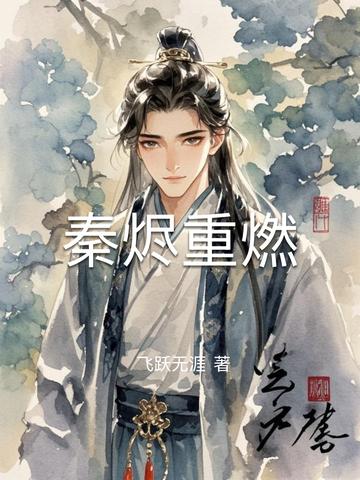
**Qin Jin rekindled**
A story about a Qin historian who possessed Hu Hai and changed his fate against the will of heaven in the countdown to the country's demise.
Reader comments
The most cruel thing about "Qin Jin Reignited" is that it never makes you feel happy.
Hu Hai traveled through time, but he couldn't change history - Fusu had to die, Meng Tian almost died, and Han Xin lost the first battle. Every win is bloody: 8,000 people buy an answer, Meng Yi breaks two ribs for an hour, Xiao He tears a hole in his ten years of faith by flipping through a few documents.
The most beautiful thing is not the battlefield, but the human heart. Xiang Yu put down his halberd not because he was defeated, but because "you came again even if you were afraid"; Zhang Liang chose common people not because he no longer hated him, but because "the living are more important than the dead"; Liu Bang did not surrender when he entered Hanzhong, but walked in by himself with the gate open.
The greatest advantage of time-travelers is not spoilers, but judgment—knowing which people to use in which way. The ferocious beasts are conquered, but the water only guides them. I chewed this book one bite at a time, and the more I chewed it, the more interesting it became.
The most cruel thing about "Qin Jin Reignited" is that it never makes you feel happy. Hu Hai traveled through time, but he couldn't change history - Fusu had to die, Meng Tian almost died, and Han Xin lost the first battle. Every win is bloody: 8,000 people buy an answer, Meng Yi breaks two ribs for an hour, Xiao He tears a hole in his ten years of faith by flipping through a few documents. The most beautiful thing is not the battlefield, but the human heart. Xiang Yu put down his halberd not because he was defeated, but because "you came again even if you were afraid"; Zhang Liang chose common people not because he no longer hated him, but because "the living are more important than the dead"; Liu Bang did not surrender when he entered Hanzhong, but walked in by himself with the gate open. The greatest advantage of time-travelers is not spoilers, but judgment—knowing which people to use in which way. The ferocious beasts are conquered, but the water only guides them. I chewed this book one bite at a time, and the more I chewed it, the more interesting it became.