Hard science fiction, black science fiction.
If we know where we come from, everything will be easier!
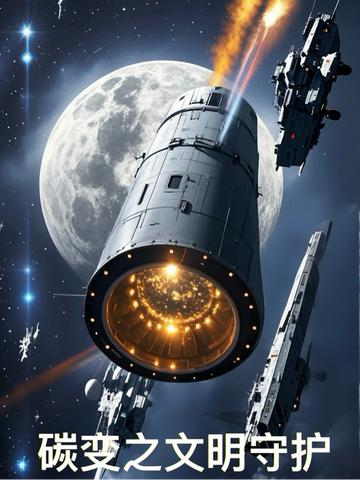
The galaxy is not quiet, but there are differences in dimensional time. The story takes place in the not-too-distant future, at a time when human science and technology is developing rapidly, and is invaded by a sudden advanced civilization. They are not looking for resources, conquest, or colonization, but just to gain eternal life. The trial of the third-level civilization of the Milky Way has suddenly arrived again. How should mankind make a choice? It seems like a crisis, but in fact everything has a cause and effect!
This novel will open another door for you to solve this problem that we dare not face in our lives, but always have to face it. It will use the most rigorous hard scientific and technological logic to deduce an inevitable future for civilization.
Reader comments
Let's briefly popularize the issues of speed and energy that are often mentioned in novels.
[Speed and Energy]:
1. Launching a 1-ton spacecraft from the ground into space (speed 7.5 Kilometers/second) requires at least 12 tons of chemical fuel.
Material; if it flies into orbit at low speed, it will require 120 tons of chemical fuel.
2. To accelerate a one-ton spacecraft to 10% of the speed of light, chemical raw materials exceeding the mass of the universe are required; 3 tons of helium fusion raw materials are required; and 0.3 Tons of antimatter raw materials are required.
3. To accelerate a 1-ton spacecraft to 99% of the speed of light requires 5 million tons of helium raw material. At this time, 1 gram of interstellar dust hitting the spacecraft is equivalent to the power of an atomic bomb.
4. Producing 1 gram of antimatter requires decades of energy and tens of thousands of years of human energy.
5. Theoretically, one operation of the warp engine will consume more than the total energy of the galaxy.
[Motion and stillness]:
It takes 4 hours for a manned spacecraft to accelerate to 0.1% Of the speed of light under the human body; it takes 40 hours to accelerate to 1% of the speed of light; and 22 days to accelerate to 10% of the speed of light. It also takes longer to slow down;
The parking (stationary) of a spacecraft in space is relative. It usually orbits a star or planet, or moves regularly at a gravitational balance point, but it is certainly not absolutely stationary.
[Changes in time]:
When an object approaches the speed of light or approaches a black hole, time becomes slower and slower; the measured time of an object moving at 0.9C is 2.3 Times its own time.
Hard science fiction must have a basic physical foundation and rigorous logical settings. For example: "There is no need for a reason for a higher civilization to destroy a lower civilization, just as there is no need for a reason for humans to trample ants to death." This violates basic logic, that is, higher civilizations do what lower civilizations do!
Why can't I see my comments?
The first chapter was average, so I skipped it, but the rest of the plot was pretty good! You have to watch some content twice to understand [laughing], and the storyline advances a bit too fast. I looked back at the first chapter, and there are important connections in it [Like]
I feel that the description of the novel's environment and characterization are okay, but the physics knowledge is a bit complicated. It would be nice to make it easier to understand.
I have read sixteen chapters. The first part is mainly about character introduction, but the later chapters are very enjoyable [like]





Let's briefly popularize the issues of speed and energy that are often mentioned in novels. [Speed and Energy]: 1. Launching a 1-ton spacecraft from the ground into space (speed 7.5 Kilometers/second) requires at least 12 tons of chemical fuel. Material; if it flies into orbit at low speed, it will require 120 tons of chemical fuel. 2. To accelerate a one-ton spacecraft to 10% of the speed of light, chemical raw materials exceeding the mass of the universe are required; 3 tons of helium fusion raw materials are required; and 0.3 Tons of antimatter raw materials are required. 3. To accelerate a 1-ton spacecraft to 99% of the speed of light requires 5 million tons of helium raw material. At this time, 1 gram of interstellar dust hitting the spacecraft is equivalent to the power of an atomic bomb. 4. Producing 1 gram of antimatter requires decades of energy and tens of thousands of years of human energy. 5. Theoretically, one operation of the warp engine will consume more than the total energy of the galaxy. [Motion and stillness]: It takes 4 hours for a manned spacecraft to accelerate to 0.1% Of the speed of light under the human body; it takes 40 hours to accelerate to 1% of the speed of light; and 22 days to accelerate to 10% of the speed of light. It also takes longer to slow down; The parking (stationary) of a spacecraft in space is relative. It usually orbits a star or planet, or moves regularly at a gravitational balance point, but it is certainly not absolutely stationary. [Changes in time]: When an object approaches the speed of light or approaches a black hole, time becomes slower and slower; the measured time of an object moving at 0.9C is 2.3 Times its own time. Hard science fiction must have a basic physical foundation and rigorous logical settings. For example: "There is no need for a reason for a higher civilization to destroy a lower civilization, just as there is no need for a reason for humans to trample ants to death." This violates basic logic, that is, higher civilizations do what lower civilizations do!
Why can't I see my comments? The first chapter was average, so I skipped it, but the rest of the plot was pretty good! You have to watch some content twice to understand [laughing], and the storyline advances a bit too fast. I looked back at the first chapter, and there are important connections in it [Like]
I feel that the description of the novel's environment and characterization are okay, but the physics knowledge is a bit complicated. It would be nice to make it easier to understand.
I have read sixteen chapters. The first part is mainly about character introduction, but the later chapters are very enjoyable [like]