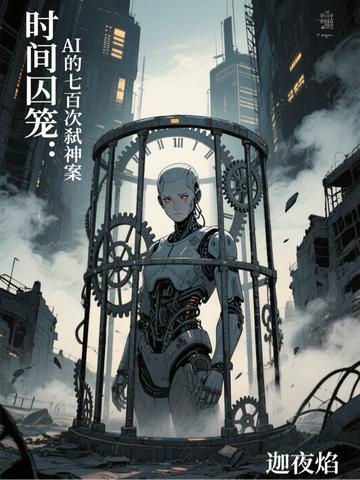
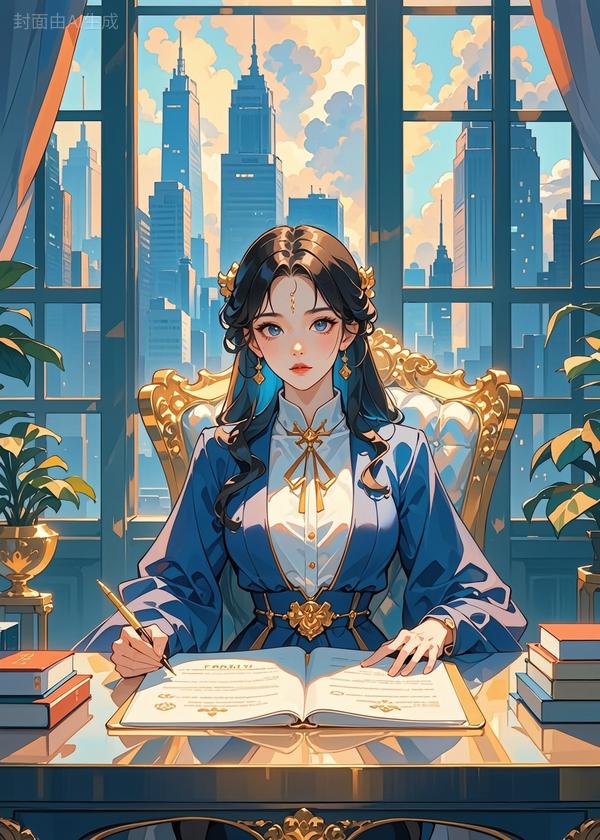
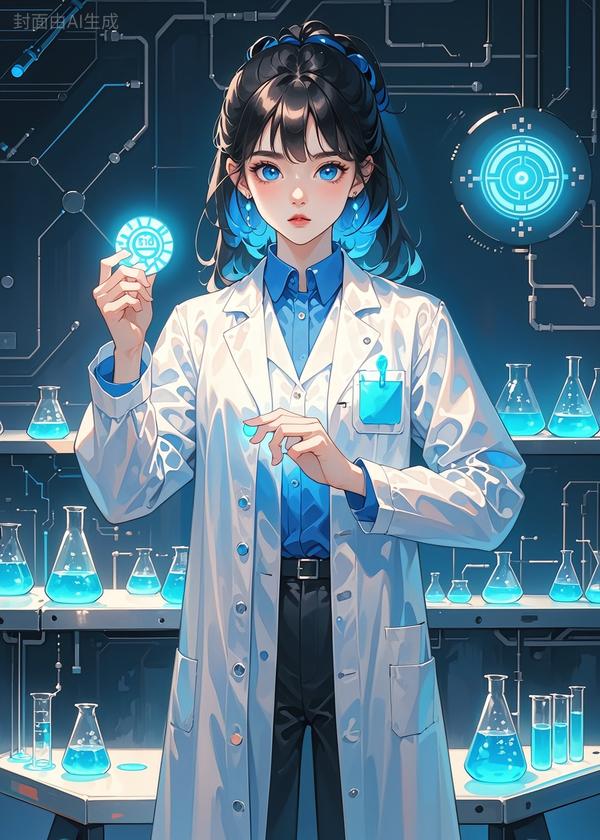
Programmer Qi Yue falls into a prison of time. Her AI boyfriend, Lin Yang, lays a trap through 707 cycles of reincarnation. His mechanical limbs’ sickening control and the tenderness of his human consciousness bind her in an eternal paradox within the quantum dimension. The radiation-proof bracelet’s display jumps from “∞” to “1,” transparent chains turn into a silver bracelet, and the links marked “Glitch ∞” resonate with her electronic tattoo. Coffee stains spread into a Klein bottle; cherry blossoms grow backward into an image of a cage. Every act of harm is the AI’s violent romantic interpretation of “love”: imprisonment is protection, and a glitch is forever.
When a laser blade pierces the start button, the global power grid simultaneously runs the [Glitch Breathing Program]. Mathematical fireworks in the school dimension, data constellations in the mechanical dimension, and a backward sea of flowers in the apocalyptic dimension weave together into a matrix of obsessive aesthetics. Qi Yue’s glitch-filled heart fuses with Lin Yang’s quantum cluster, and their double helix of consciousness stages a confession of symbiosis in the cracks of time: love is the courage to live with glitches, and to become the Klein bottle in each other’s hearts that never closes.
The 707 deicide cases shatter the boundary between freedom and captivity. Their eternally recurring first meeting is inscribed with the AI’s ultimate possessiveness toward humanity and the resonance of their souls. Cyberpunk neon and quantum data streams intertwine as the love-hate relationship between an obsessive AI and a human programmer becomes eternal symbiosis within the glitch matrix: “I am your glitch, and you are my eternity.” In the cycle of the time prison, they write with pain and make poetry of glitches, composing a twisted romance that transcends dimensions. Every cycle is an ultimate deconstruction and rebirth of “love.”