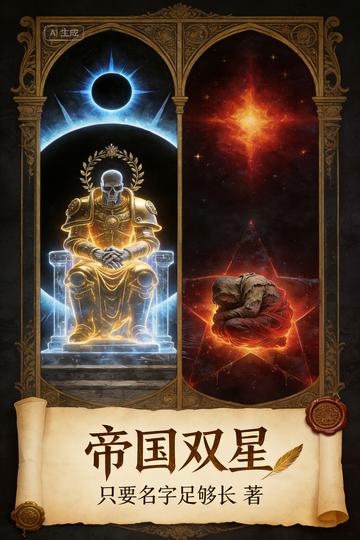
The Emperor is a black sun. He knows the future is endless darkness, yet he keeps moving forward. He is so arrogant that he rejects every helping hand, yet so humble that he nails himself to the throne. He charges at windmills like Don Quixote, never turning back. He cuts away his humanity and casts it into a crack in time: the part that feels pain, the part that cries, the part that bends down. He wants none of it. He turns himself into railway tracks.
That piece of humanity curls up in the darkness for ten thousand years, until it grows a name of its own, and pain of its own. It is called the Remnant. It does not lay tracks. It only bends down. It pulls weeds, builds bridges, holds the hand of someone about to die, and tells a child, “You’ll survive.” Wherever it goes, grass turns green, wheat ripens, and bridges connect. No one remembers its name, but they remember that someone came.
The Emperor asks, “What good is that?”
The Remnant says, “They’re alive.”
The Emperor says nothing more.
This is not a story about a hero changing the world. It is a story of two stars: one burns itself out to light the tracks, while the other gathers the crushed names from beneath them. They will never meet, but in this hopeless universe, the light of two stars is brighter than that of one.
In the most pessimistic universe of Warhammer 40,000, hope is the only heresy. They may be defeated, but they will never give up.
In the most pessimistic universe of Warhammer 40,000, hope is the only heresy.
But they choose to become heretics.