#Rebirth in the 1980s #Women's Growth #Family Healing #Light Comedy #Time Paradox#
A middle-aged woman turns the tables in 1987.
“If you could live your life over, how many mistakes would you fix?”
Zhou Meiling is 43, unemployed and divorced, estranged from her daughter, and caring for her sick mother: a textbook case of midlife crisis.
After one drunken night, she is reborn in 1987 as her eight-year-old self.
But this time, she has an adult’s memories, workplace know-how, and a heart battered by life.
◆ When a “middle-aged soul” is trapped in a “child’s body”:
- Uses **business negotiation skills** to outwit school bullies
- Turns her **mother’s unappetizing rice with lard** into internet-famous soy sauce fried rice
- Works through calculus at the **Olympiad math competition**, astounding the whole school
- Warns of her **father’s layoff crisis** 20 years early, only to trigger a butterfly effect…
◆ When “knowledge of the future” collides with “the reality of the 1980s”:
- Makes her first fortune **reselling stamps**, then attracts the attention of the Industrial and Commercial Bureau
- Uses **2023 parenting theories** to teach her young parents
- Runs into the childhood version of her **future husband** and faces an ethical dilemma
- Discovers that the timeline in which **her daughter exists** is gradually disappearing…
“The greatest tragedy isn’t being unable to change the past. It’s changing it and still not being happy.”
On this absurd journey through time, Zhou Meiling gradually realizes:
The right answer to life isn’t a flawless résumé, but the courage to make peace with your imperfect self.
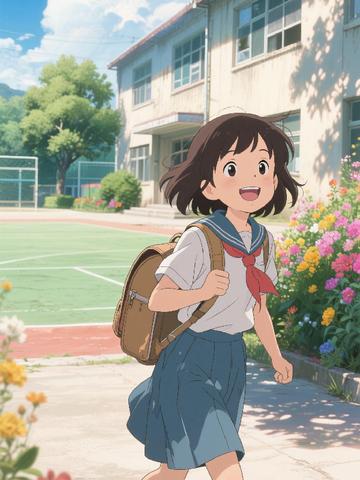







Turning over the title page of "Becoming a Primary School Student in the 1980s", a strong sense of nostalgia hits the face - the iron pencil case, the hopscotch game, the "small speaker starts broadcasting" from the old radio... These symbols hit the emotional bullseye of contemporary urbanites so accurately that we almost ignore the fact that what we miss may never have been the real 1980s, but a carefully constructed emotional utopia. This book is more like a magic mirror than a memoir, reflecting contemporary society's collective imagination and spiritual consumption of the "Age of Innocence".