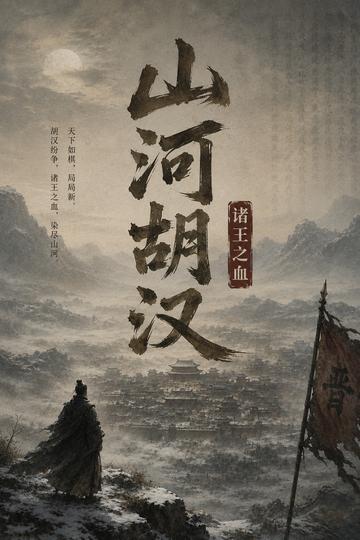
In 304 AD, the kings of the Western Jin Dynasty fought against each other. Luoyang was not captured, but the world was divided.
Liu Yuan, a noble of the Xiongnu, proclaimed himself the King of Han in Bingzhou and raised his troops to rebel against the Jin in the name of "reviving the Han Dynasty"; Shi Le, a Jie man, rose from the slaves and rebels and eventually pointed his sword at the Central Plains; Liu Yao, Wang Mi, Sima Yue, Liu Kun, Zu Ti, Fu Jian, Murong Chui, and the Tuoba clan appeared one after another, competing for destiny in the broken mountains and rivers.
Luoyang was burned, Chang'an was ruined, Yiguan crossed south, and Hu rode into the pass. Nobles, ministers, refugees, surrendered generals, emperors and slaves were all involved in this chaotic world that spanned more than a hundred years.
This is not a story about a hero saving the world.
This is a story about how after the collapse of the old empire, everyone is trying to survive, become king, take revenge, defend their territory, and establish a country.
"Mountains and Rivers, Hu-Han: Blood of Kings" takes the historical background from the end of the Western Jin Dynasty to the unification of the north in the Northern Wei Dynasty, and describes the rise and fall of the Hu-Han heroes and the Central Plains dynasties during the Five Hu and Sixteen Kingdoms era. The historical facts are made of bones, and the portraits are made of blood, describing the hundred years of troubled times between the ashes of Luoyang, the dying sun of Chang'an, the new dynasty of Jiangzuo and the northern cavalry.