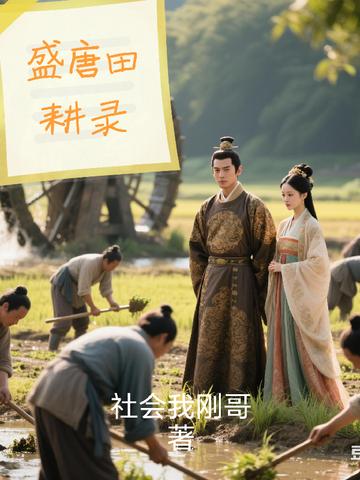
It tells the story of Su Huaijin, a student of the Imperial College during the reign of Emperor Gaozong of the Tang Dynasty. He was hunted for exposing the private occupation of public land by powerful people. After falling off a cliff, he lived in a village in Guanzhong under an assumed name. He concealed his past and used modern agricultural knowledge to improve the curved shaft plow and popularize the double-cropping system of rice and wheat. He took advantage of the loopholes in the land equalization system and rent adjustment in the Tang Dynasty to lead the villagers to avoid heavy taxes, and competed with the local tycoon Zheng Xuanli in the process of reclaiming wasteland and building water conservancy. When the imperial court issued an order to expand households, he used the user registration system to forge documents to survive. He also integrated labor through social organizations and spread agricultural knowledge through night classes. He gradually became the core of village reform from being a refugee from a broken kiln. The work uses delicate brushstrokes to outline the texture of grassroots governance in the Tang Dynasty. In the wood chips of the plow and the ink fragrance of bamboo slips, a long pastoral scroll of the prosperous Tang Dynasty is intertwined with technological innovation and institutional games. It not only shows the fireworks of millet and wheat farming, but also the undercurrent of changes in the records of the public court and the power of the trade routes.
Reader comments
I didn't write what year, month or day, so I wrote Si Shi and You Shi. I don't know, but I thought it was the same day.
I didn't write what year, month or day, so I wrote Si Shi and You Shi. I don't know, but I thought it was the same day.