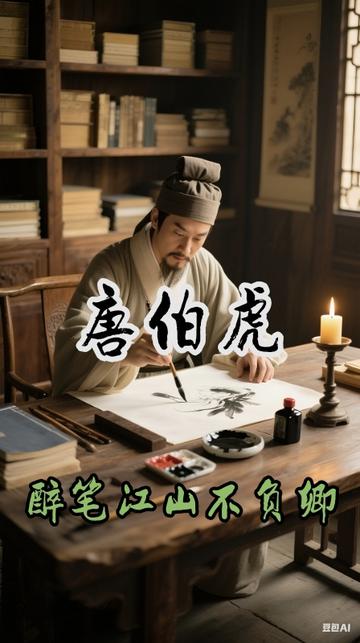
When a drop of ink falls on xuan paper, what spreads is a lifetime of rising and falling fortunes. My name is Tang Yin, my courtesy name Bohu. I once held a brush and painted a vast landscape, never imagining that what I sketched would be not only a work of art, but an abyss of fate.
When I first sat the imperial examinations, I was riding high, as if success were within easy reach. Who could have guessed that an examination scandal would erupt like thunder, casting me from the clouds into the dust? Stripped of my official status, I became a commoner. My family was torn apart, and my former classmates avoided me like the plague. The poetry-and-wine pledges of old became a cruel joke. This was the first act: adversity, as a gifted scholar falls from grace, his integrity crushed beneath the weight of power.
Yet the misty rains of Jiangnan care nothing for the joys and sorrows of the world. In the mountains and forests, I picked up my brush again, grinding ink with tears and painting with my soul. I painted Listening to Pines on a Mountain Path, hearing the wind whisper through the pines; I painted Palace Maids of the Former Shu, watching beauties vanish like a dream. The world called me carefree and romantic, never knowing the pain I hid in my drunkenness. It was only when Prince Ning, Zhu Chenhao, sent an envoy to invite me that I wandered into a dragon’s lair and learned the dangers of political intrigue. This was the second act of my life: a turning point. Returning from the world of wanderers to the fringes of the court, I caught a glimpse of the truth behind the troubled times.
The price came soon after. I feigned madness to escape disaster, pretending to be insane to slip away. From then on, I gave up all thought of a career in government. For the rest of my life, I kept company only with brush and ink, bearing witness through my paintings to the Ming empire as it weathered storm after storm. Only as the third act drew to a close did I understand that a true man of letters is not found in the court, but on the page and in the heart.
If talent cannot bring about a peaceful and prosperous age, then how should a scholar face this shattered land?