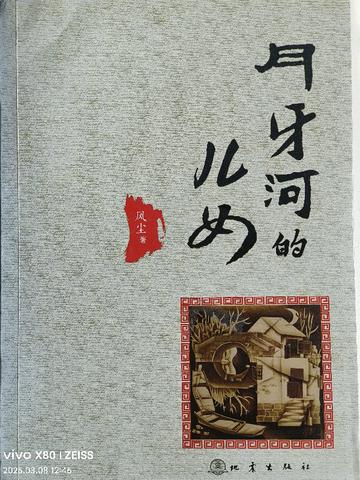
Xiao Die, a 22-year-old Chinese literature student, and Niu Wanle, a 40-year-old low-level civil servant, engage in a battle of identities and souls in a world where virtuality and reality intertwine. Curious and mischievous, Xiao Die treats life like a game, while Niu Wanle is disillusioned, numb, and powerless to change his fate. Online, each plays a character whose personality is the opposite of their own, acting out a story of a young girl and an older man.
Written in a magical realist style, the novel builds a dual narrative across two worlds. In reality, Niu Wanle is a model civil servant who follows the rules and lets his ideals wither amid piles of paperwork. Online, he becomes a playboy, unleashing the self he has kept suppressed. Xiao Die, meanwhile, dons the mask of a gentle, cultured woman, and her online persona collides with Niu Wanle’s double life in cyberspace.
Using mirrored narratives to probe the fabric of society, the novel shows how Generation Z uses irreverence as a survival strategy against anxiety, while also portraying the spiritual pain of middle age. The duality of Niu Wanle, restrained in reality and unrestrained online, reflects the clash between traditional values and postmodern thought. As their role-playing gradually spirals out of control, a game that began in virtual space becomes a soul-searching inquiry into the nature of existence.
Breaking free of conventional generational narratives, the novel uses black humor to deconstruct the “older man and young girl” fantasy. Beneath a Lolita-like surface lies a social allegory reminiscent of Folding Beijing. It captures online subcultures with precision, examines the difficulties of life within the system, and renders the spiritual predicament of modern people through a blend of absurdity and reality.