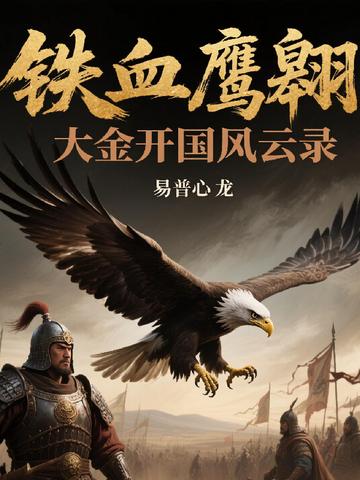
At the beginning of the 12th century, the Jurchen tribe struggled to survive under the brutal oppression of the Liao Kingdom. At the spring banquet of 1112, Emperor Zuo of the Liao Dynasty drunkenly ordered the Jurchen chiefs to dance. Wanyan Aguda refused to give in, sowing the seeds of rebellion against the Liao Dynasty. Faced with the greedy demands for Haidongqing by the Yingfang envoys of the Liao Dynasty and the economic penetration of Ningjiang Prefecture's privately minted Shuangwen coins, Aguda secretly accumulated strength, used the "recommendation of new people" ritual to unite the tribe, created fierce and restrained measures, and built the "Iron Pagoda" heavy armored cavalry. After ascending to the throne of Dubo Jilie in 1113, he fought against all the opposition to reform the cow head tax, and dug holes in the ice of the Hun Tong River to catch fish to alleviate the spring famine and win the hearts of the people. In 1114, he won a great victory in Ningjiang Prefecture. He cleverly used heavy arrows to break through armor and fire to attack Shuo Feng, defeating more with less. In 1115, he proclaimed himself emperor and established the Jin Dynasty. However, he faced tribal backlash, cultural conflicts and diplomatic difficulties. He created the Jurchen script and inherited the orthodoxy of the Bohai Kingdom with the title of "Shou Guo". In the Battle of Hubudaggang, he used the birch forest hunting tactics to annihilate the main force of the Liao army, and captured the jade seal to lay the foundation of "Destiny". After the founding of the People's Republic of China, Aguda implemented the "cattle tax" to reform the economy, integrating legal codes and customary laws, and seeking a balance between preserving the tradition of felt tents and building palaces. In his later years, he was tortured by kidney stones, but he still planned the delivery of goods in Xijing, perfected the "exchange of awards" method, and burned the Bohai classics before his death. In 1123, he died on the banks of the Huntong River. Hundreds of thousands of people held torchlight sacrifices at night, and his coffin was buried in Beijing, leaving behind a rising Jin Dynasty and the immortal figure of a legendary founding emperor.
How much is postpaid?
If it looks good