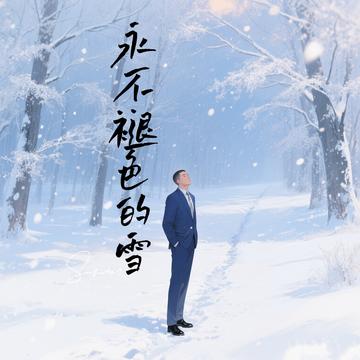
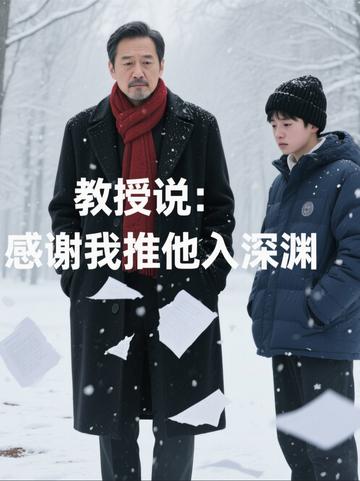
On a snowy night at Beijing Institute of Technology, artificial intelligence professor Gong Mingyuan catches doctoral student Chang Xiao violating the rules while using the supercomputer in the lab. Curled up in front of a blue-lit screen, Chang Xiao types code infused with ambition and vulnerability. As Gong Mingyuan tears up the disciplinary notice, he catches sight of an old burn scar on the back of Chang Xiao’s hand, like an algorithmic flaw that never healed.
They are trapped on the Klein bottle surface of academia and emotion: while grading Chang Xiao’s paper, Gong Mingyuan hides his initial assessment calling it “dangerous”; in a fruit-distribution algorithm, Chang Xiao buries 0.13% excess tenderness. Then Chang Xiao installs a program to confess his love on Gong Mingyuan’s computer. The pulsing heart-shaped code burns the computer case and scorches through the barriers they have kept in place.
When the commercial tide swallows their research ideals, Chang Xiao chooses to sever the data cable of his brain-computer interface. Carrying the academic disgrace Gong Mingyuan took on for him, he plunges into the world of fame and fortune. Years later, beneath the cherry trees, the bottle of long-overdue Maotai coffee has turned sour. As Gong Mingyuan wipes the shards of the glass Chang Xiao broke back then, he discovers a topological formula carved on the inside: the minimum spanning tree of love and paradox, a problem he has never managed to solve.
Snow falls in silence. The server log remains forever frozen at Error 3113: Memory Overwritten By Emotional Redundancy.