[Three Kingdoms, group portraits, no system, conspiracy, Huo Qubing, fighting for hegemony, supporting Han]
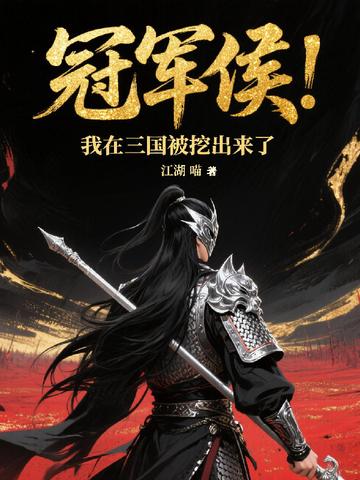
In the sixth year of Yuanshou, Huo Qubing, a hussar general who was only twenty-four years old, passed away. Like a bright star, he appeared briefly and then left.
Three hundred years later, before the princes gathered for an alliance, Cao Ren was ordered to inquire about Dong Zhuo's intelligence. When he came to Fufeng County, he decided to rob the tomb of Maoling champion due to lack of food. As a result, he accidentally awakened Huo Qubing from three hundred years ago.
After learning about the decline of the Han Dynasty and the frequent occurrence of rebellious ministers, Huo Qubing decided to summon the descendants of the old tribe to support the generals of the mansion.
In these troubled times, there are Li Ru who seek to help the poor family, Cao Cao who shows his heroic posture, Liu Bei who lurks in the abyss, and the descendants of the prince Liu Ju who were plagued by witchcraft...
In troubled times, heroes emerge, but the great man has his cavalry!
Reader comments
The first time I read this book was because of Huo Qubing. After all, it was a pity that he bravely won the title of Marquis of the Three Armies at the age of eighteen, was granted the title of wolf at the age of 22, and died quietly at the age of 24. After reading the first few chapters, I felt that the author spent a lot of space writing a Machiavellian drama, which seems a bit interesting. There is no system, no time travel, and no God's perspective. I feel that both Cao Cao and Li Ru have their own ideas. Although they are not described in so many pages now, I feel that the author has ideas to write about them. He does not deliberately strengthen the protagonist's awesomeness. It is more like a group novel. Give me a little encouragement. Come on.
There is no system, the combination of machinations and group portraits, and the big and small counselors each have their own positions and ideas, which is very rare. Although there is no major war scene yet, the foreshadowing is already sketchy and vivid on the paper. The intellectual duel between Xun Yu and Jia Xu, the final outcome of Li Ru's plan for the Han Dynasty, etc.
The first time I read this book was because of Huo Qubing. After all, it was a pity that he bravely won the title of Marquis of the Three Armies at the age of eighteen, was granted the title of wolf at the age of 22, and died quietly at the age of 24. After reading the first few chapters, I felt that the author spent a lot of space writing a Machiavellian drama, which seems a bit interesting. There is no system, no time travel, and no God's perspective. I feel that both Cao Cao and Li Ru have their own ideas. Although they are not described in so many pages now, I feel that the author has ideas to write about them. He does not deliberately strengthen the protagonist's awesomeness. It is more like a group novel. Give me a little encouragement. Come on.
There is no system, the combination of machinations and group portraits, and the big and small counselors each have their own positions and ideas, which is very rare. Although there is no major war scene yet, the foreshadowing is already sketchy and vivid on the paper. The intellectual duel between Xun Yu and Jia Xu, the final outcome of Li Ru's plan for the Han Dynasty, etc.
Good-looking, good-looking, good-looking, good-looking