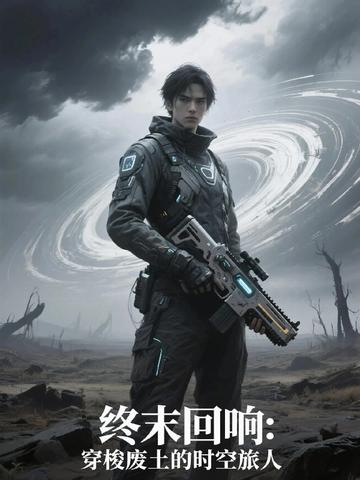
Final Echo: a Time Traveler Traveling Through the Wasteland
终末回响:穿梭废土的时空旅人
- Status
- Ongoing
- Length
- 373k Words
- Genre
- Sci-Fi & Apocalypse
- Audience
- Male
- Updated
- 7mo ago
- Source
- Fanqie
Stats
2Reads
148Chapters
113Reads · all time
Tags
Synopsis
Reader comments
In booklists 3

Alas! Isn't There Something Amazing About Apocalyptic Literature? I Have Seen Many of Them
I want to watch content similar to "Time Traveling through the Apocalypse: The Green Tea Female Supporting Actress Is a Whispering Monster". The end of the world, natural disasters or zombies are all fine. The heroine wears books and dresses as a vicious female partner. There is space or a system. The hero is a special soldier. The hero and the heroine have been in love for a long time. The original heroine
58.2MViews215Books1dUpdated

Novels to Collect Forever
It's so sweet, the male protagonist and the female protagonist are both clean
8.5MViews892Books1dUpdated


Come up with All the Works with the Most Novel Writing Styles in 2025!
I want to read a book similar to "The Thousand-Year Ancestor of the Western Ruins". This work with a novel creative style in 2025 must be highly recommended!
2.4kViews107Books19dUpdated
In the Stardust universe where science fiction and poetry intersect, "Last Echo: Time Travelers Traveling Through the Wasteland" uses unique imagination to build a civilization resonance that spans light years. The work centers on the poetic conflict between stardust, dark dust and earth civilization, and blends hard-core science fiction settings and soft humanistic philosophy into a dazzling cosmic poem. The rhythm of stardust gathering and dispersing, the void stillness of dark dust, and the contradictory symbiosis of the earth. These three completely different poetic systems are not simple oppositions, but mirror images of civilization carefully designed by the author. From the poetic code of the light dust ruins to the existential metaphor of the core of the stardust poem, every foreshadowing is closely linked to the theme of "symbiosis", allowing the philosophical speculation of "dynamics and stillness" to become a tangible boundary of light patterns and rhythms in the poems. The character creation is full of tension: Lu Ran uses the poetics of the earth as a bridge, Orion uses the paradox of genetic resonance, and the gear poet uses logical gears to decode. They do not export the advantages of civilization in one direction, but understand the differences in the collision. The transformation of the leader of the Dark Dust Poet is particularly moving. From rigid obsession with nothingness to regaining the memory of symbiosis, he completed the arc of "confrontation-dialogue-reconciliation", confirming that the power of civilized dialogue is far better than military conquest. The subtlety of the work is that it turns abstract philosophy into a poetic battle: the paradox of symbiosis breaks down the barriers of nothingness, and the lines of civilized dialogue dissolve the boundaries of consciousness, making the concept of "paradox and symbiosis" not only remain in words, but also become the core driving force of the plot. The foreshadowing of the origin of cosmic poetry at the end opens up a broader space for imagination for the story. This is not only a science fiction adventure, but also an ode to the universe about understanding and respect. In the gathering of stars, we see the ultimate answer to the survival of civilization - using poetry as the medium and symbiosis as the way.