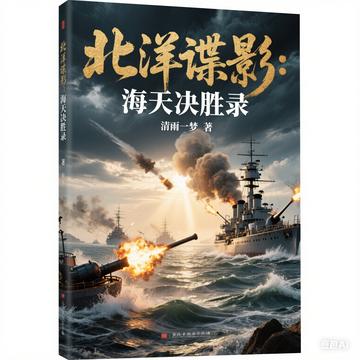
When Lin Fu, a modern naval tactics instructor, mysteriously traveled through the world during the Sino-Japanese War of Sino-Japanese War in the Yellow Sea, what his palms touched was no longer an electronic sandbox, but the hot rust on the deck of the Dingyuan ship. In 1894, the sea was covered in smoke and the Qing navy was being strangled by the artillery fire of the Japanese "Yoshino". The miniature electronic dictionary he hid in his underwear pocket was flashing with fluorescent characters a countdown to changing history.
As a "lurker" disguised as a pipe belt, Lin Fu had to fight on two battlefields at the same time: at the tactical level, he integrated modern information warfare theory into the aiming of Krupp's main gun, and used torpedo evasion maneuvers to rewrite "Zhiyuan" The tragic ending of the ship recreated a hard-core naval battle like "The Sunset" on the deck with shrapnel flying across the deck; in the secret battle of power, he saw through Li Hongzhang's secret code tampered by the Japanese army, tracked the spy network behind the Weihaiwei supply ship, and traced the details of the oiled fuses in the ammunition depot to the collaborators at the core of the Beiyang Navy.
When Ding Ruchang's flag changed its formation in the thick smoke, and when Ito Hirobumi's alienation plan penetrated the fleet with the light signal, Lin Fu not only had to deal with the formation crisis caused by the "Jiyuan"'s escape, but also had to decipher the fatal trap in the Morse code in the cold light of the dagger in the telegraph room. The phrase "the price of changing history" in the electronic dictionary hangs high like the sword of Damocles, and the diamond formation tactical diagram he drew by himself is intertwined with the secret folds of the Qing court's military aircraft office and the code book of the Japanese consulate in the whirlpool of history.