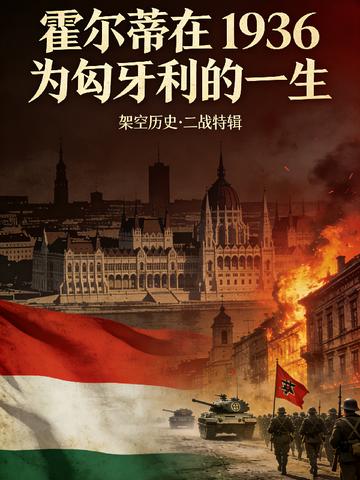
In 1936, Istvan, the eldest son of Hungary's Regent Horthy, awakens from a pair of nightmares: in one, the Axis powers turn on one another, Hungary is avenged upon by its neighbors, and the country is left at their mercy; in the other, Hungary becomes a Soviet puppet.
Burdened with warnings of a grim fate, this heir combines engineering talent with political savvy. He takes charge of the Gyor armaments program and uses technology to bring Hungary's industry up to the level of Italy and Japan. Seizing the opportunity presented by the annexation of Austria and Germany's conquest of Czechoslovakia and Poland, he claims territories Hungary considers its own and unites the nation.
He secretly reaches out to Romania and makes the Bulgarian crown prince his godson. Through royal bonds and shared military industry, he heals old Balkan feuds and forges unity amid the tensions between the Axis and the great powers.
As World War II draws to a close, Istvan pools the resources of five countries and transforms the fledgling Balkan Federation into an integrated industrial system with a unified defense force. It stands firm against German reprisals and pressure from the United States and the Soviet Union, breaking once and for all the twin tragedies of infighting and subservience. His legend of “uniting against hegemony” rewrites the fate of small nations and the course of the Cold War.
From Spain to Hungary, fighting in cooperation and surviving in confrontation is the struggle of small countries