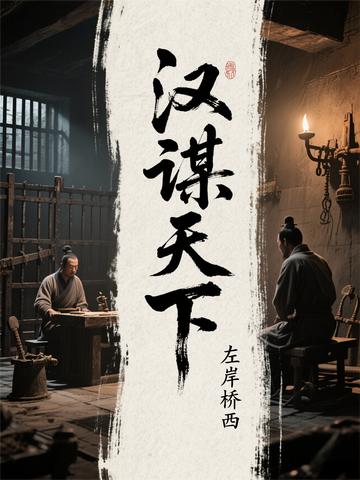
Centered on Chen Ping of the Western Han, this novel offers an in-depth examination of the dialectical relationship between political stratagems and moral duty. It portrays the difficult choices and struggles historical figures faced as they weighed achievement against conscience. The author reconstructs historical settings with rigor and precision, showing both respect for historical authenticity and a deft command of artistic interpretation.
The novel's narrative is coherent and layered. Chen Ping's life provides the backbone, while key historical events form the threads, creating a well-paced plot with clear echoes between its beginning and end. For instance, the "dividing meat according to the size of one's stomach" in Chen Ping's youth structurally echoes his later "dividing grain as if dividing meat," underscoring the calculating quality of his character. Particularly striking is the use of symbolic objects, such as bronze sacrificial vessels and swords, to deepen the connection between the plot and the characters' inner lives, lending the historical narrative a greater sense of weight.
Chen Ping is portrayed as a rich, fully realized figure, shaped by a deep historical inheritance and a complex, realistic personality. He is not only a master of political stratagems, but also a man wounded by the very schemes he wielded. His interactions with historical figures such as Liu Bang, Xiang Yu, Han Xin, Yuan Gusheng, and Lü Zhi are rendered with great subtlety. The author successfully captures the human nature and emotional entanglements underlying power politics, giving these figures fresh life within their historical setting. In particular, the philosophical debate with Yuan Gusheng faithfully reflects the intellectual conflicts and competing values of the early Han, revealing both the ingenuity of political maneuvering and its ethical dilemmas.